
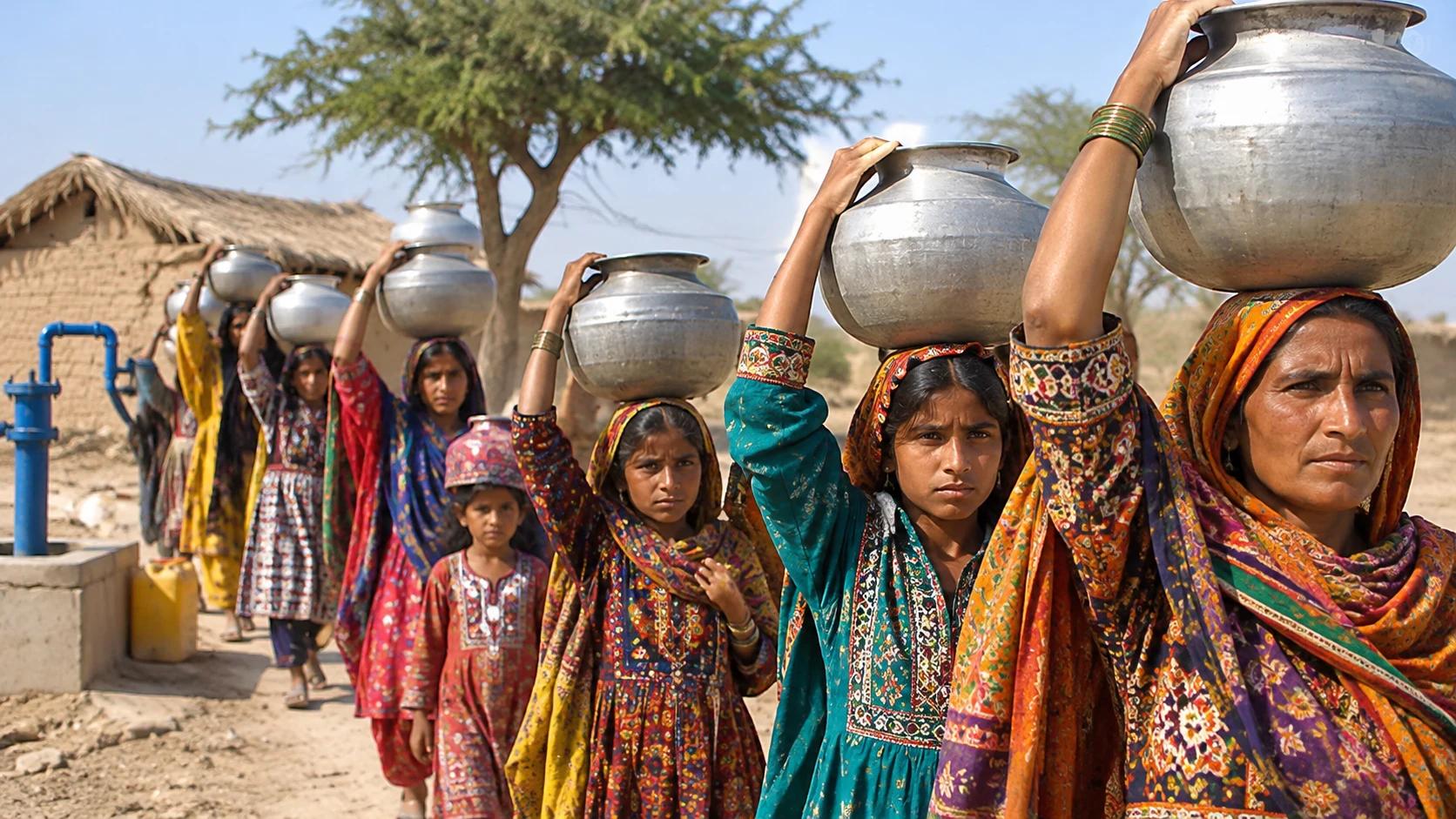
World Bank approves $300 million as Sindh launches an ambitious drive to deliver clean water to 1.5 million people, combat childhood stunting and create 14,000 jobs.
KARACHI, Nov. 15 (Focus Pakistan) — The World Bank Sindh water project has secured $300 million in financing to bring safe drinking water, sanitation and hygiene services to 1.5 million people in rural Sindh, a province where more than half of children under five are stunted.
The bank’s Board of Executive Directors approved the money on Nov. 13 for the first phase of the Sindh Transformational Accelerated Rural Water Supply, Sanitation and Hygiene Services Project, known as STAR WASH-1, the bank’s Islamabad office said on Saturday.
“Stunting is among Pakistan’s most severe and persistent human capital challenges, and unsafe water, sanitation and hygiene is a major underlying driver,” said Bolormaa Amgaabazar, the World Bank’s country director for Pakistan.
Sindh Water Project Targets 40% Fewer Beneficiaries
An earlier project plan envisaged reaching about 2.5 million people, while a September Sindh stakeholder engagement plan identified 1.5 million beneficiaries. The Asian Development Bank’s project page, though, still lists 16 of Sindh’s 23 districts.
That works out to 40% fewer projected beneficiaries, though the documents do not say why the number came down.
Also Read: Thar Coal Capacity Jumps 47%, Factories Could Be Next: Sharjeel
Some 90% of rural households in Sindh drink water carrying E. coli, earlier World Bank documents found, often because of poor sanitation and hygiene rather than a dirty source.
World Bank, ADB Finance $540 Million Programme
The first phase carries a total cost of $540 million. The World Bank’s $300 million splits into $200 million from the International Development Association, its concessional lending arm, and $100 million from the International Bank for Reconstruction and Development. The Asian Development Bank adds $150 million, and the Sindh government puts in the equivalent of $90 million.
The biggest slice, $482 million, goes to water supply, sanitation and hygiene services themselves, the project information document shows.
The money will pay for solar-powered water schemes, upgraded sanitation and wastewater systems, and hygiene campaigns in selected rural areas. Of the 1.5 million people in the project’s sights, 750,000 should get safely managed water, according to the bank’s project information document.
Also Read: World Bank Says Pakistan Could Triple Incomes by 2050 Through Sweeping Economic Reforms
The document separately targets safely managed sanitation services for 1.5 million people.
The bank expects the project to create more than 14,000 jobs. It will also turn Sindh People’s Housing for Flood Affectees, a government-owned non-profit, into a utility company for rural water and sanitation.
The project aims to link 80% of the communities it covers to professional service providers and to halve contamination of drinking water at the point of use.
Under a Full Mutual Reliance Framework agreed recently between the two lenders, the ADB will put in its $150 million.
Pakistan’s Central Development Working Party recommended the Rs151.2 billion STAR WASH-1 project to the Executive Committee of the National Economic Council on Sept. 25, according to Planning Commission records.
STAR WASH-1 was the largest of seven foreign-funded Sindh projects, worth $895 million together, to clear the working party.
The board moved faster than planned. The project information document had scheduled appraisal for Sept. 28 and approval for Nov. 25.
Clean Water Delivery Faces Long-Term Challenges
STAR WASH-1 is only the first of four phases in a 10-year programme, so three more rounds of financing would have to follow.
Earlier rural water schemes in Pakistan focused on building assets and did not deliver lasting services at scale, according to the bank’s documents.
Khyber Pakhtunkhwa and Punjab also fall under the wider programme, World Bank documents show, and Balochistan could join if it asks.
The harder part starts once the pipes are laid: keeping the water flowing, and clean, for years.