
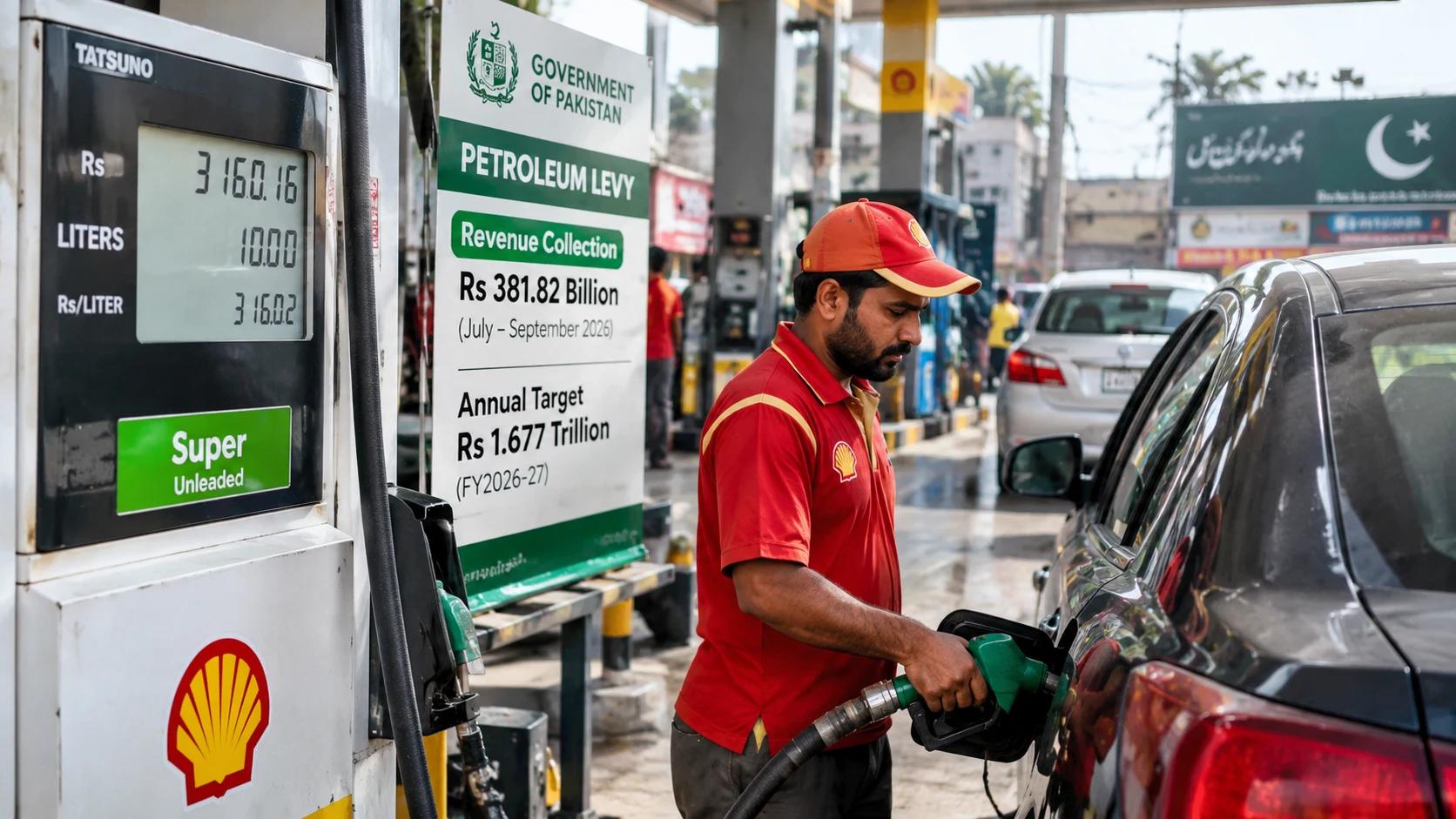
Fuel-related collections climb as government raises Rs381.82 billion from petroleum levy, with additional revenue flowing through carbon and electric vehicle charges.
ISLAMABAD, Nov. 14 (Focus Pakistan) — Pakistan petroleum levy collection hit a record Rs381.82 billion between July and September 2026, official documents show, marking the highest first-quarter receipts in the country's history.
The take for the first quarter of FY2026-27 exceeds the Rs371.6 billion that the government raised in July-September 2025 by Rs10.21 billion, according to the documents, and dwarfs the Rs261 billion of July-September 2024.
The budget for 2026-27 puts the levy at Rs1.677 trillion. Last year the government beat its goal, with actual provisional collection of Rs1.567 trillion for 2025-26 against a budget target of Rs1.468 trillion and a revised estimate of Rs1.498 trillion.
Collections in 2025-26 ran 28% above the Rs1.22 trillion of 2024-25, according to the Finance Ministry’s fiscal operations data.
The IMF Link
“The petroleum levy collection is also part of the fiscal targets agreed under the IMF Extended Fund Facility,” Petroleum Minister Ali Pervaiz Maliksaid in a written reply to the National Assembly last month.
The same reply showed that the government collected Rs4.4 trillion through the levy from 2022-23 to 2025-26, against a target of Rs4.2 trillion.
That four-year haul beat the target by about Rs227 billion.
Also Read: Kuwait Picks Pakistan as Regional Fuel Hub After Hormuz Crisis
In July, Malik told a National Assembly committee that the IMF was unlikely to approve any cut in the levy unless Pakistan found another source of revenue.
The International Monetary Fund projected an even larger Rs1.73 trillion for FY27 in the staff report it issued in May.
At the Pump
This month’s price notifications show Rs80 a litre in notified petroleum levy on petrol and on high-speed diesel, plus Rs5 a litre in climate support levy, with general sales tax at zero. The budget expects Rs50 billion from the climate levy in 2026-27.
Under Pakistan’s daily fuel-pricing system, petrol fell to Rs330 a litre and high-speed diesel to Rs360 on November 14, compared with Rs346 and Rs378, respectively, on November 7.
Since late October, under a temporary arrangement, the notified Rs80 petrol levy has included a reported refinery contribution of Rs16.36, which leaves an effective Rs63.64 in the price motorists pay.
Motorists paid Rs2.50 a litre in climate support levy when the charge started in July 2025; they now pay Rs5.
With Rs381.82 billion already collected, Pakistan has nearly 23% of its annual levy target in hand. To reach Rs1.677 trillion, the government must raise another Rs1.295 trillion by June 2027, roughly Rs432 billion a quarter.