
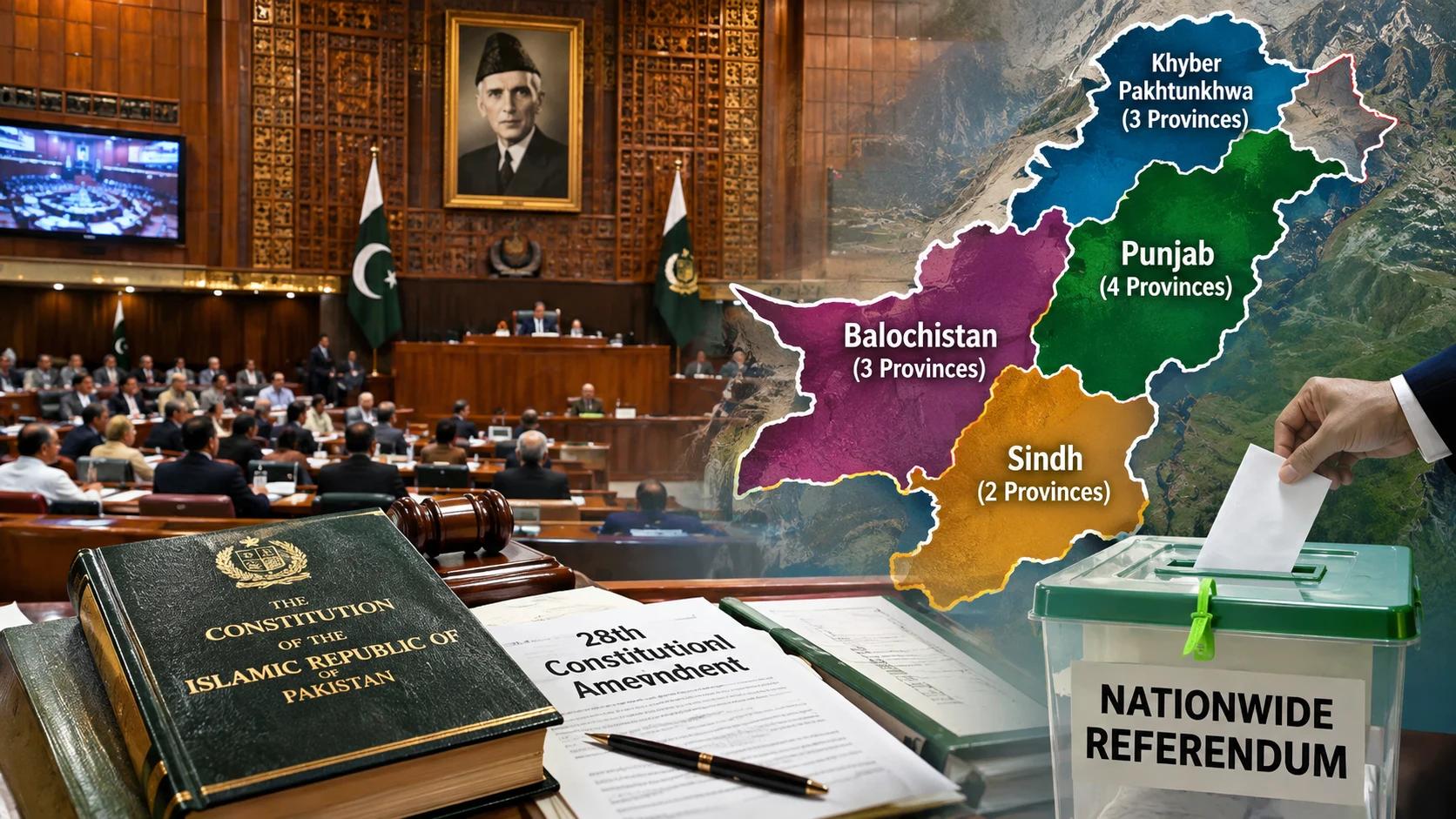
Proposal seeks nationwide referendum before possible 28th Constitutional Amendment in 2027, but provincial consent remains a major obstacle.
ISLAMABAD, Nov 8 (Focus Pakistan) - A proposal to give Pakistan 12 provinces instead of four has surfaced in Islamabad, and it comes with a nationwide referendum and a sweeping constitutional overhaul attached.
According to the 2023 census, Punjab is home to nearly 128 million of the country’s 241.5 million people. Under the draft, it would become four provinces. Khyber Pakhtunkhwa would get three. So would Balochistan, which covers roughly 44 percent of Pakistan’s land but recorded fewer than 15 million residents in that count. Sindh would split in two.
People aware of the discussions say the referendum would come first, and a 28th Constitutional Amendment would follow. No one has signed off on the boundaries yet. The same goes for how the new provinces would run and which legal route the government would take. The government has not announced the 12-province plan or attached its name to it.
The dates also shift depending on who you ask. Early internal thinking puts the amendment in the first half of 2027, with groundwork starting as early as January. On Nov. 1, Special Assistant to the Prime Minister Huzaifa Rehman pointed to a faster track and said the 28th Amendment could come before this year ends. He called parliament and a referendum “the proper forums for gauging public opinion.” He also argued that the amendment offers the last real window for new provinces. Rehman did not endorse any specific map.
What backers want
The case for the plan rests on distance and neglect. Take a family in Rajanpur, on Punjab’s southwestern edge. Their provincial capital, Lahore, lies more than 400 kilometres away. Supporters of the proposal say Pakistan’s population has simply outgrown a four-province setup designed for a far smaller country.
Also Read: Islamabad’s Controversial One Constitution Avenue to Become Five-Star Hotel
Smaller units, they argue, would make it easier to track how hospitals and schools actually perform. Problems would surface sooner, and development money would have a better chance of reaching backward districts instead of stopping in the big cities.
People involved in the discussions insisted the plan does not single out any province.
Few issues in Pakistani politics turn ugly as fast as new provinces. Parties tend to count the votes they might lose. Regional leaders fear for their identity and their share of power. The proposal’s backers see a public vote as a way around that deadlock.
The Constitution sets out a route for one. Under Article 48(6), the prime minister can refer a matter of national importance to a joint sitting of parliament. If the joint sitting approves, the prime minister may put the question to voters in a nationwide yes-or-no referendum.
But a referendum result moves no borders. Any constitutional amendment needs the votes of two-thirds of the total membership of each house of parliament. When an amendment alters a province’s limits, Article 239(4) adds a second lock: two-thirds of the total membership of that province’s own assembly must also approve it. So Sindh’s lawmakers, for example, would effectively decide Sindh’s fate.
Constitutional lawyer Hafiz Ahsaan Ahmad Khokhar has argued that nothing in the law requires a referendum on new provinces. A fair vote could still lend the process democratic legitimacy, he said, but it cannot stand in for the constitutional procedure.
Sindh holds the key
Opposition will likely be fiercest in Karachi. The Pakistan Peoples Party runs Sindh and has warned more than once that it will resist any amendment that chips away at provincial autonomy. Chief Minister Murad Ali Shah said last year his party would not accept any move against Sindh or Pakistan. The MQM-Pakistan, a partner in the federal coalition, has said it will use legal and democratic means to seek new provinces through the amendment.
Money and representation raise harder questions still. A 12-province Pakistan would reopen the debate over how the National Finance Commission shares federal revenue. Parliament would also have to decide how the Senate, where each province now holds equal seats, accommodates the new units. Any constitutional overhaul would have to address both.
The country has redrawn its internal map before. In 1955, the One Unit scheme folded West Pakistan’s provinces into a single unit. It lasted 15 years.
Backers say this attempt should be judged on one question: whether a district that has waited decades for a working hospital finally gets one.