

Energy giant KPC plans to store and re-export petroleum products through Pakistan as Islamabad opens its ports, storage terminals and pipelines to foreign suppliers.
KARACHI, Nov. 13 (Focus Pakistan) — Kuwait Petroleum Corporation (KPC) will store fuel in Pakistan for sale in the local market and re-export to regional buyers, Pakistan State Oil (PSO) said on Thursday, handing Islamabad a Gulf partner for a bonded storage scheme that foreign suppliers ignored when it first launched in 2023.
“KPC will utilize Pakistan’s storage and port facilities under the Government of Pakistan’s recently revised Customs Bonded Storage Policy, which offers a more facilitative framework for international suppliers,” PSO said in a statement.
The ports KPC will use, the volumes it will hold and the date its first tanks will fill all went unmentioned. PSO said Pakistani departments still need to complete some procedures and paperwork, which it expects shortly.
Pakistan’s Economic Coordination Committee approved revised bonded storage guidelines in August, after disruptions in the Strait of Hormuz exposed weak points in the country’s fuel supply chain.
Under those guidelines, foreign suppliers can import petroleum products on their own account and store them in customs-bonded facilities, deferring import duties and taxes until the fuel enters the domestic market.
Also Read: PPL’s Rs623 Billion Unpaid Bills Overshadow Record Rs99 Billion Profit
The new framework gives foreign suppliers access to Pakistan’s pipeline network for bonded stocks and the right to re-export them without prior regulatory approval, with exceptions for sanctioned goods and the Negative List.
Saudi Arabia, Kuwait and Qatar all took part in consultations on the plan before the ECC signed off, officials said in August. Foreign firms keep title to the fuel; Pakistan, in return, gets a reserve it can tap in an emergency.
The two state-owned firms have traded diesel under a long-term contract since 1976, and Kuwait now accounts for more than 60% of Pakistan’s diesel imports. Their current three-year deal, which expires in December, provides for annual volumes of between 1.8 million and 2.2 million metric tonnes.
In Kuwait, the two firms agreed to keep their gasoil, or diesel, and jet fuel supply arrangements in place, and to look at whether Kuwaiti cargoes to Pakistan could also carry motor gasoline and petrochemicals.
Islamabad announced a disruption in Jet A-1 supplies on March 26, and asked foreign carriers to bring return fuel and cut back on refuelling in Pakistan. Two months later the Khairpur, a Pakistani-flagged tanker, carried about 45,000 tonnes of diesel and 10,000 tonnes of jet fuel from Kuwait, with special approvals in hand.
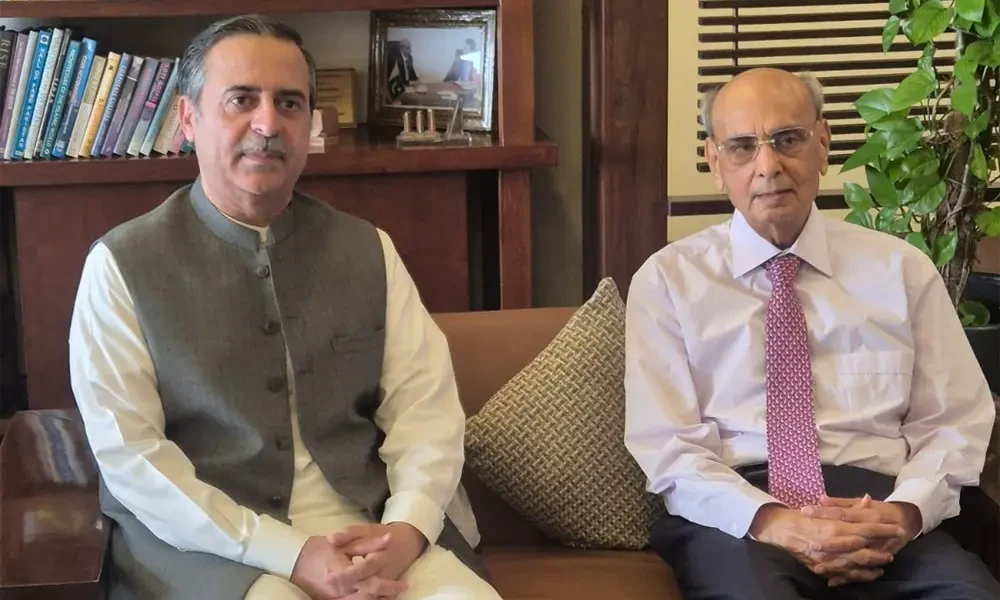
Chief Executive Officer Jawwad Ahmed Cheema led the PSO delegation in meetings with KPC Chief Executive Officer Shaikh Nawaf Saud Al-Sabah and Shaikh Khaled Ahmad Al-Sabah, KPC’s managing director of international marketing, as the two state-owned companies looked to widen a partnership that has run for five decades.
Cheema said KPC’s interest in Pakistan’s storage and port infrastructure “presents opportunities to strengthen energy security, facilitate regional trade and attract investment.” “PSO is committed to translating these discussions into tangible outcomes for the next fifty years,” he added.
The two sides also discussed base oil supplies, cooperation in lubricants marketing and possible Kuwaiti investment in Pakistan’s gas sector, refining, storage infrastructure, shipping and logistics. PSO gave no figures or timelines for any of those proposals.
Islamabad has pitched the bonded scheme as part of its plan to make Pakistan a regional fuel distribution hub.