
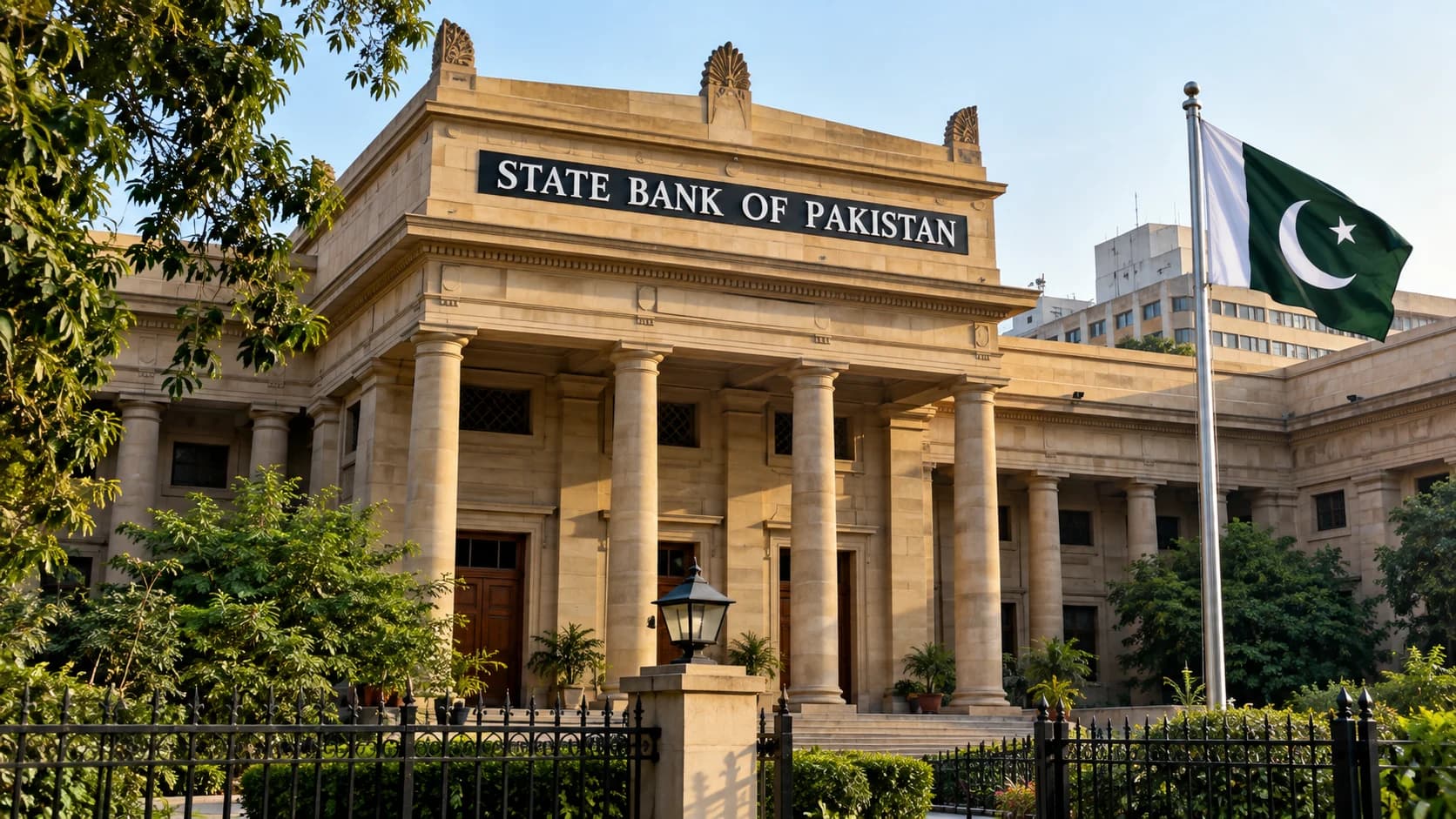
KARACHI, Oct 16 (Focus Pakistan) - Pakistan’s central bank on Friday introduced the SBP Tawarruq financing cap, restricting
how much Islamic banks can finance through tawarruq, a commodity-trading structure that turns a purchase into ready cash. Scholars have argued over the product for years, and the SBP has now put a number on how far banks may use it.
The SBP introduced the restrictions through its adoption of Shariah Standard No. 30 of the Bahrain-based Accounting and Auditing Organization for Islamic Financial Institutions (AAOIFI), which calls the practice “monetization.” IFPD Circular No. 03 of 2026 carries the change. The rules take effect immediately for Islamic banks, Islamic banking subsidiaries and conventional banks with Islamic branches.
Guidelines in Annexure-I of the circular limit tawarruq-based transactions to 5% of an institution’s gross financing portfolio. Consumer financing gets its own ceiling, set at 10%.
How Tawarruq Works
Here is how it runs. The bank sells the customer a commodity and lets them pay later. The customer then sells it on to someone else, at once, for cash. The customer walks away with money and owes the bank a fixed price later.
Also Read: Wahdat Profit Jumps 27%, But Flock Revaluation Did Heavy Lifting
Critics say that sequence can mimic an interest-bearing loan when the trades exist mainly on paper. Not every scholar rejects tawarruq outright, though. At a session in Sharjah in April 2009, the International Islamic Fiqh Academy ruled in Resolution 179 that organised and reverse tawarruq were impermissible, because the financier and the customer run the trades in tandem. The academy’s objection centred on those pre-arranged forms, not on the classical version, in which the customer finds a buyer independently. AAOIFI’s standard allows the structure, but only under strict conditions on ownership and sale.
SBP Tawarruq Financing Cap
The SBP has now added guidelines on hajah, or genuine need. They aim to separate customers with a real financing requirement from deals that simply copy conventional borrowing through a chain of commodity trades.
Annexure-I also sets out separate treatment for cases in which a bank converts a customer’s conventional financing into an Islamic arrangement.
The circular extends the regulator’s gradual adoption of AAOIFI rules. In September 2024, the SBP adopted standards on financial rights, protection of capital and arboun, or earnest money. In January 2025, it added AAOIFI’s standard on controlling gharar, or uncertainty, in financial transactions. Two months later, it took on Standard No. 20, which governs the sale of commodities in organised markets, the same markets that tawarruq deals typically run through.
Pakistan’s Constitution sets a deadline for eliminating riba. The 26th constitutional amendment of 2024 rewrote Article 38(f), one of the Constitution’s Principles of Policy, so that it now requires the state to eliminate riba by Jan 1, 2028. The tawarruq rules arrive as banks prepare for that shift.
WHAT THE SBP TAWARRUQ CAP MEANS FOR BANKS
Banks that break the rules risk penalties under the Banking Companies Ordinance, 1962, the SBP said. Its earlier instructions still stand alongside the new standard.
Banks now have to measure their current tawarruq exposure against the caps and review how they structure new deals. Lenders that offer tawarruq-based personal financing face an extra test because of the separate consumer limit.
The central bank has not published the industry’s total tawarruq exposure. It has given no estimate of how much lending the caps might affect. Bank earnings and borrowers’ costs go unmentioned too.
The circular does not ban Islamic personal financing, and it sets no new profit rate.
For borrowers, the effect will depend on each bank’s book. Banks with small tawarruq books may hardly feel it. For heavier users, one possible route runs through other structures, such as ijarah leasing, murabaha trade finance or musharaka partnerships. How far lenders go down that path will become clear only as they review their portfolios.