
Four agro-processing parks, 162,000 jobs and a sweeping agricultural overhaul anchor Punjab’s ambitious investment drive through 2029.
LAHORE, Nov 7 (Focus Pakistan) - Somewhere between the orchard and the mandi, Pakistan throws away a huge share of its harvest. The Asian Development Bank puts the loss at up to 40 percent for fruit and vegetables. The Punjab PIVOT plan wants that produce in factories instead.
Sardar Usama Fayyaz Leghari, Punjab’s Parliamentary Secretary for Agriculture, put a price tag on the idea on Friday: Rs1.995 trillion in investment. He also cited a target of USD6.8 billion in extra exports. The jobs target tops 162,000.
He spoke as a five-day international workshop wrapped up in Lahore. Its theme was smart agriculture and value-added farm products. Pakistan’s National Productivity Organization (NPO) hosted it from November 2 to 6 with the Asian Productivity Organization (APO), which has its headquarters in Tokyo. Delegates came from across APO’s member economies.
Leghari didn’t sugarcoat the pressures. Climate change is squeezing farmers. So is water scarcity. Post-harvest losses eat into whatever survives. In his view, old methods can’t cope with that, and farming has to modernise, use resources carefully and follow the market. Bigger harvests alone won’t secure the sector’s future, he argued. Smart technology will, along with turning raw commodities into processed goods that can compete abroad.
Where the money goes
One caveat matters here. Those big numbers belong to the whole PIVOT programme, not just farming. The Punjab cabinet approved the plan on October 19, and Chief Minister Maryam Nawaz unveiled it on October 30. Public money accounts for Rs1.089 trillion. For the other Rs906 billion, the government is counting on private investors. Factories, tourism and skills training all compete for the same pot.
Agriculture value addition takes Rs355.5 billion, according to the plan’s breakdown. Livestock gets Rs149.9 billion and aquafarming Rs110 billion. Within the farm budget, Rs135 billion goes to mechanisation. Another Rs20 billion will build wheat silos to close a storage gap the plan puts at 20 to 25 million tonnes.
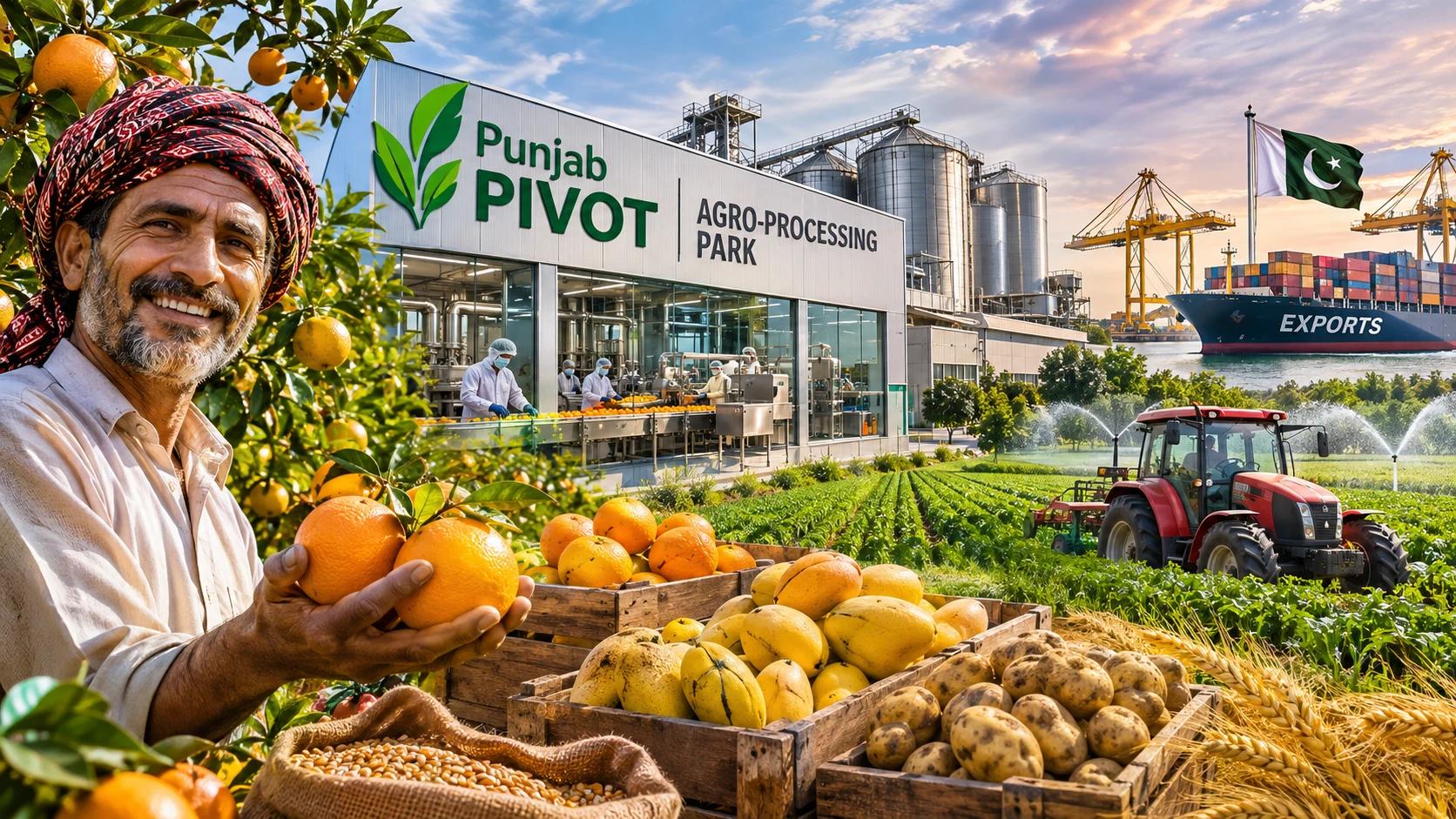
The most visible piece sits in four districts: Sargodha, Khanewal, Okara and Bhakkar. Each will get an agro-processing park. The government has put Rs60 billion behind them, spread over three years. Planning documents put each park at 250 acres with Rs15 billion in public money.
Three of the parks already have a crop to chase, according to those documents. Sargodha, the heart of kinnow country, will centre on citrus. Okara will handle potatoes. Khanewal and the surrounding mango belt will focus on mango processing. The documents don’t yet name a focus crop for Bhakkar.
The parks will offer cold storage, grading, processing and certification. Those are the same weak links the ADB flagged in its 2019 report on Pakistan’s horticulture value chains, which put farm-to-market losses at 30 to 40 percent of fruit and vegetable output. The bank also found that growers often pocket just 15 to 20 percent of the retail price.
PIVOT feeds into the federal URAAN Pakistan programme and its 5Es framework, which carries a national goal of USD60 billion in annual exports. Punjab’s USD6.8 billion target makes up a sizeable slice of that ambition.
Inside a dairy plant
Delegates spent the week in technical sessions. On November 4, they toured Nestlé Pakistan to study dairy value addition, food processing and supply-chain management first-hand.
NPO chief executive Muhammad Alamgir Chaudhry thanked APO for its continued support and credited programme officer Tanvir Faisal, along with resource persons Prof Dr Edi Santosa of Indonesia, Tariq Mehmood of ZTBL and Prof Dr Shinawar Waseem Ali of the University of the Punjab. He urged participants to turn what they learned into practical projects that lift farm productivity.
Punjab has put close to Rs2 trillion behind its wider economic overhaul. For a kinnow grower in Sargodha, the test is simpler. The park has to open. Buyers have to pay more. And less of the crop has to rot before anyone buys it.