
Global Summit for Eye Health commitment from Pakistan will expand primary eye care, strengthen the workforce and improve access for underserved communities across Pakistan
PAKISTAN, Nov 5 (Focus Pakistan) - Pakistan has announced a key national commitment at the Global Summit for Eye Health, pledging to expand access to primary eye care for up to 60 million people by 2030 through the scale-up of Advanced Primary Eye Care (APEC) services across the country.
With Pakistan's population projected to reach nearly 277 million by 2030, the Government will operationalise at least 150 additional Rural Health Centres (RHCs) as APEC centres, each staffed by a trained optometrist and equipped to provide eye examinations, refraction services, early detection of cataract, glaucoma and diabetic retinopathy, primary low-vision care, and referral services.
The commitment aims to bring essential eye care closer to communities, particularly those living in rural and underserved areas, women, and persons with disabilities.
The announcement comes as new data from the International Agency for the Prevention of Blindness (IAPB)’s Vision Atlas highlights the significant social and economic benefits of investing in eye health in Pakistan. According to IAPB's Value of Vision analysis, an investment of US$148 million in eye health between 2026 and 2030 could generate US$709 million in economic benefits, avert 367 deaths among older adults, prevent more than 43,000 cases of depression, and deliver an equivalent of more than 32,000 additional years of schooling.
Also Read: Pakistani Surgeon Who Performed 4000 Heart Surgeries Wins Britain's Lifetime Achievement Award
Alongside expanding services, Pakistan has committed to strengthening the eye health workforce by establishing or enhancing four public-sector optical technician training programmes and training at least 200 optical technicians by 2030. The country will also integrate harmonised eye health indicators into its District Health Information System, enabling routine monitoring of services and progress towards global eye health targets.
As a key organisation working to expand access to eye care in Pakistan, SightSavers has been advancing community-based approaches to improve access to vision services, particularly for underserved populations.
Munazza Gillani, Director for Pakistan and the Middle East at Sightsavers highlighted “Basic eye care, such as glasses, cataract surgery, and treatment for trachoma and river blindness, can change lives. It helps children learn, enables people to earn a living, and restores independence.”
“We envision a world where no one is left behind, regardless of income, gender, background, or circumstances. Turning that vision into reality is our shared responsibility. No single organisation can achieve this alone. By working together with government, partners, and communities, we can extend eye care services further and reach more people, including those in the most remote areas. Eye care is a practical way to transform lives today while building a healthier, more equitable future for generations to come.”
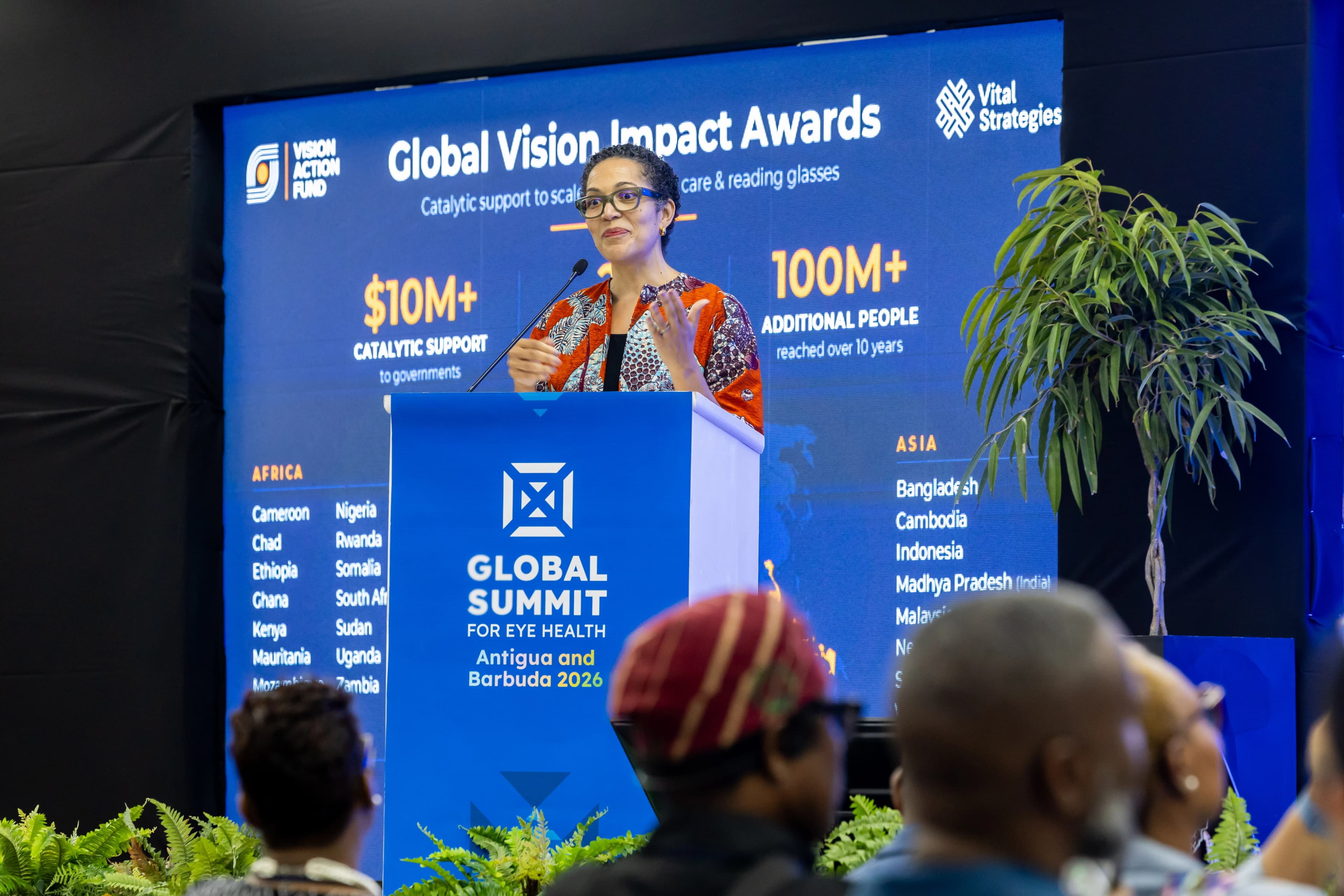
The commitment was unveiled at the first-ever Global Summit for Eye Health, where governments, development partners and health leaders gathered to accelerate action against avoidable sight loss worldwide.
Peter Holland, CEO, IAPB, said: “The Global Summit for Eye Health marks a defining moment for global eye health. Never before have so many governments, organisations, and private sector leaders come together around a shared commitment to expand access to sight-saving care. The package of commitments announced this week will improve the lives of hundreds of millions of people and help them go to school, stay in work, care for their families, and participate fully in society. It demonstrates growing recognition that investing in eye health is an investment in human potential, economic growth, and sustainable development.”
Expected outcomes of the commitment by 2030 include:
● At least 150 additional RHCs operating as APEC centres with deployed optometrists, improving access to primary eye care and refractive services for up to 60 million people.
● At least four optical technician training programmes were established or strengthened, with 200 technicians trained and capacity developed for future formal opticianry qualifications.
● Eye health indicators integrated into the national health information system, with 100% reporting compliance among commitment-supported APEC centres and at least 95% compliance among public-sector district and sub-district eye units.
● Disability inclusion measures embedded across participating facilities, workforce development programmes and service delivery.
Pakistan's commitment supports the goals of the Global Summit for Eye Health to accelerate action towards universal access to eye care and reduce avoidable sight loss worldwide.