
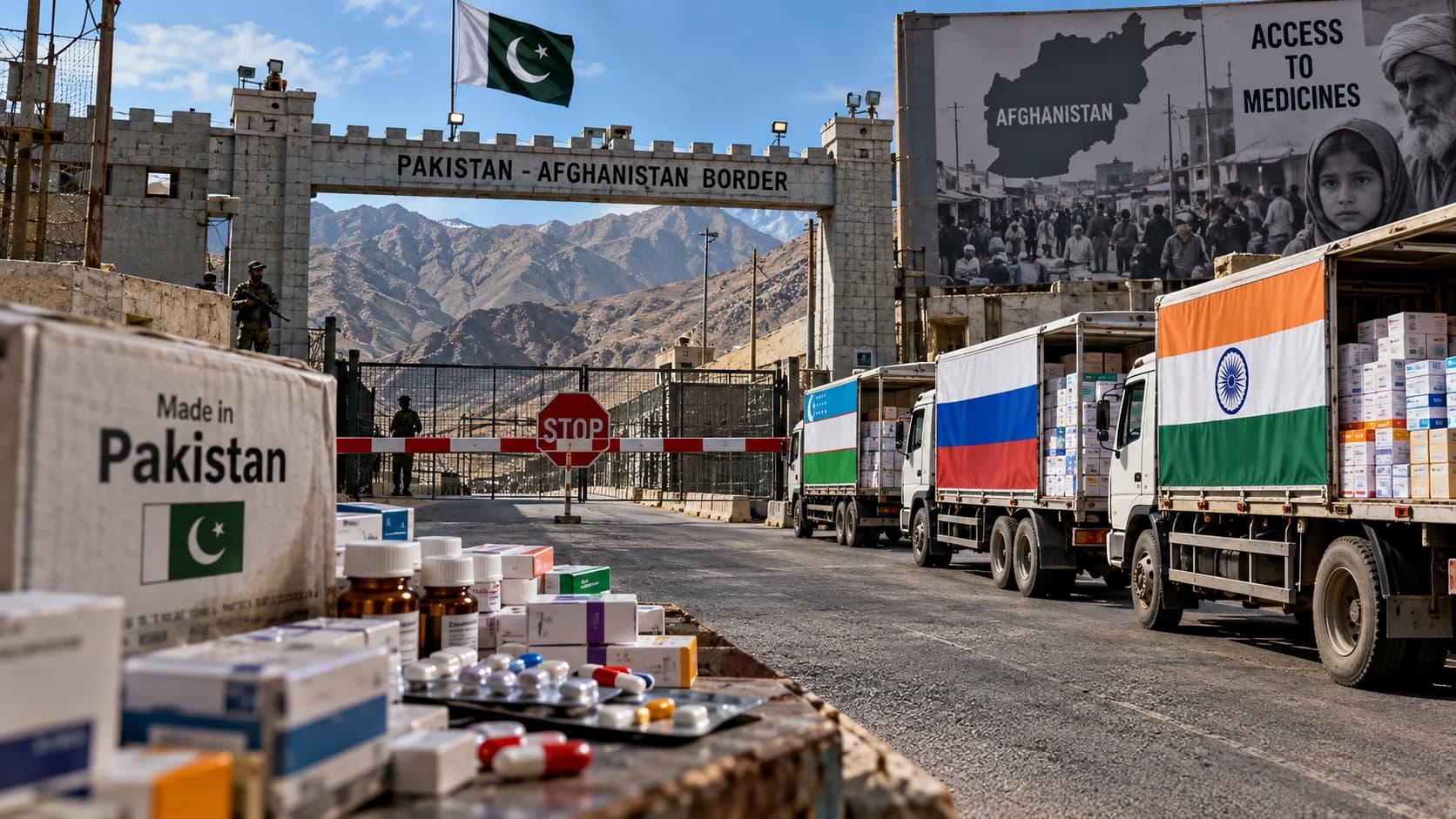
KARACHI, Oct 22 (Focus Pakistan) - Pakistan medicine exports face mounting pressure after Afghanistan banned Pakistani pharmaceuticals in February, threatening access to a major overseas market. Indian and Russian suppliers are pursuing new opportunities as Pakistani drugmakers struggle with declining international sales.
The damage shows in the numbers. Pakistan pharmaceutical exports fell $138.44 million, or 30.3%, to $319.01 million in the year ended June 30, their lowest level in three years, according to figures the Pakistan Pharmaceutical Manufacturers Association (PPMA) gave Business Recorder.
The association blamed the lost Afghan sales for most of the drop. It gave no breakdown by destination. Former PPMA chairman Tauqeer-ul-Haq also pointed to weaker competitiveness in some low-margin markets.
A year earlier, the industry had been celebrating. Exports hit $457.45 million in FY25, and Afghanistan took 42% of that total, Haq said.
Kabul set the terms of the break. Afghanistan’s finance ministry told traders in November 2025 that customs would stop processing medicines imported from Pakistan after three months. In January, it fixed Feb 9 as the final cutoff, Pajhwok reported.
For Afghans, the stakes ran just as high. Afghanistan International reported that Pakistan supplied more than 70% of the medicines the country needed before trade stopped. The outlet did not explain how it measured that share. AFP put Pakistan’s portion at more than half.
India’s $100 million deal, Russia’s supply plans
India already had a foothold. It shipped $100.27 million worth of pharmaceutical products to Afghanistan in 2024, UN Comtrade data show.
Also Read: DRAP Tightens Medical Device Import Clearance, Restricts Old System
Then it went after more. In November 2025, at the Afghan consulate in Dubai, Afghanistan’s Raoufi International Group, also reported as Raoufi Global Group, put its name to a $100 million memorandum of understanding with Zydus Lifesciences. Zydus ranks among India’s biggest drug companies. The plan, as the Taliban-run commerce ministry laid it out: exports first, then a local office, and eventually a factory on Afghan soil. An MoU signals intent. It does not lock either side into a sales figure.
Moscow has its own play. Russian manufacturer Pharmasyntez told Interfax in May it had reached agreement with Afghanistan’s health ministry and planned to send its first shipments within two months. The company did not name the medicines. Focus Pakistan found no public confirmation from the company or Afghan authorities that those shipments have arrived.
That announcement followed an April meeting in Kabul. There, Health Minister Noor Jalal Jalali and Russian Ambassador Dmitry Zhirnov discussed short-term imports of Russian medicines and Russian investment in Afghan drug production, the health ministry said.
Uzbekistan wants in too. Uzbek officials and UNICEF discussed medicine supplies for Afghanistan on Oct 19, Afghanistan International reported. The same outlet said shortages and rising prices persist.
Shortages, smuggling and a lost market
Patients have felt it for months. Prices for some medicines doubled or tripled after Pakistani imports stopped, 8am Media reported in February. Traders who had stockpiled Pakistani stock reportedly sold it at up to 10 times the old price. In Kandahar, residents told Afghanistan International in May that some essential medicines had grown scarce or disappeared altogether.
Pakistani medicines have not vanished, though. Traders and health sources told the same outlet that large quantities now cross the border through smuggling routes.
That grey trade muddies the true scale of Pakistan’s loss. Haq told The News in January that much of the Afghan business ran in Pakistani rupees, so customs databases never captured it. Waheed guessed the informal flow at three to four times official exports, though he offered no data to back the estimate.
Kabul insists it can cope. Afghan officials say local factories now produce about 600 types of medicines, AFP reported.
Pakistan’s $138 million export decline is already on the books. The longer-term damage may prove harder to undo. India is chasing new commercial deals, Russia is preparing to enter, and Kabul is courting alternative suppliers. Whether Pakistani manufacturers win back their old customers may depend on how long the border stays shut. It has been closed to trade since October 2025.