
Ahsan Iqbal restates the 2030 AI target at a Pakistan-Russia tech forum, as the two countries look to technology to revive trade that collapsed over payment problems
ISLAMABAD, Nov 5 (Focus Pakistan) - The government wants one million Pakistan AI professionals by 2030. By the planning minister’s own count, the country turns out more than 75,000 graduates a year.
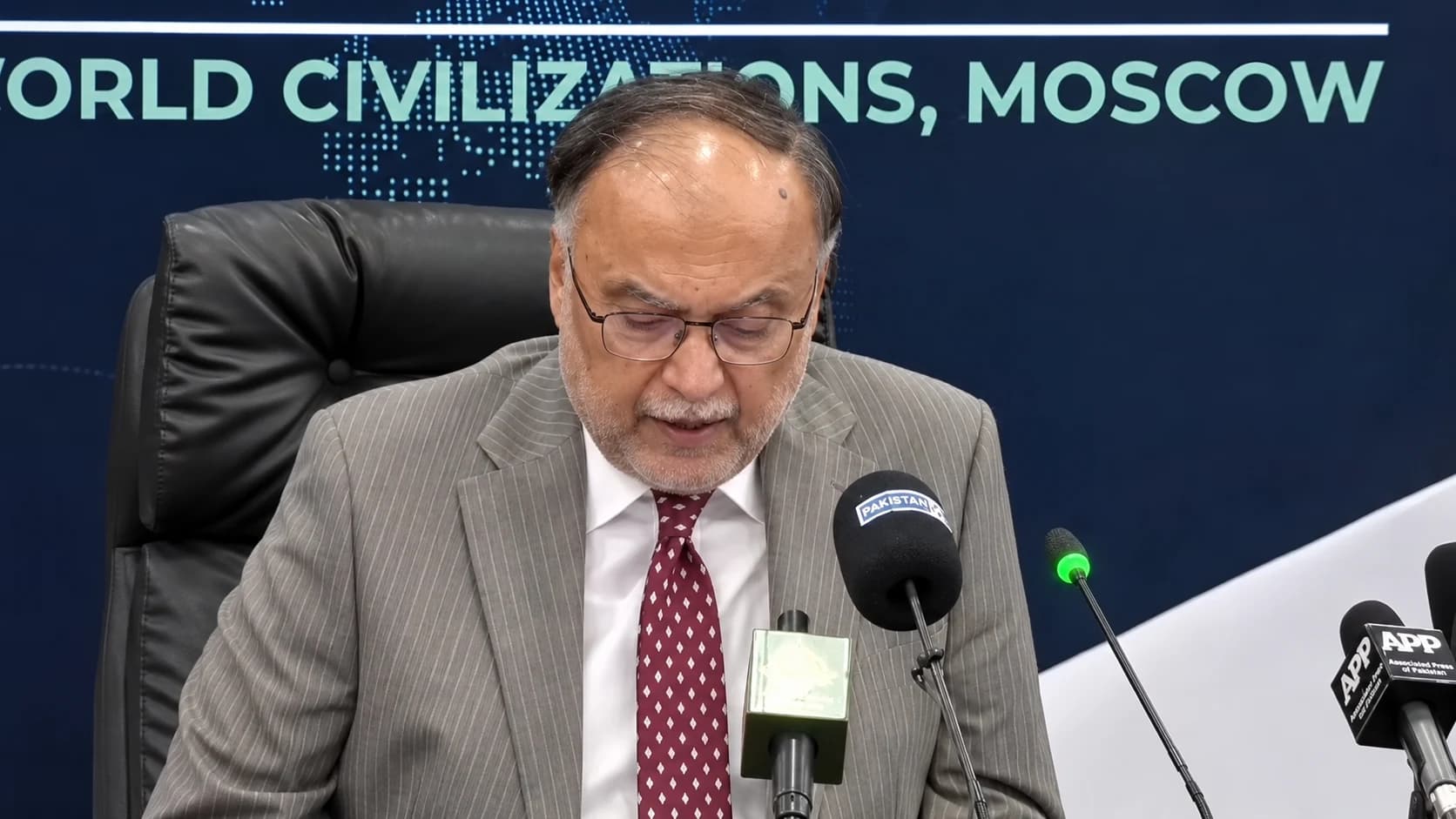
Ahsan Iqbal restated the target on Thursday at a Pakistan-Russia technology forum, where he pressed companies from both countries to turn handshakes into contracts.
The target isn’t new. Shehbaz Sharif’s cabinet put it on paper back in July 2025, when it approved Pakistan’s first National AI Policy. The policy went further than headcount. It talked of 3,000 scholarships every year. A thousand AI products built in Pakistan. Fifty thousand public projects running on AI. And money, through an innovation fund and a venture fund, to get private investors interested.
Now the sums. Four years, one million people: that’s 250,000 every single year. Iqbal’s own graduate figure is 75,000 and change. Even if every one of them chose AI, the country would get barely 30% of the way there each year.
The policy does count upskilled professionals and business people, not just fresh graduates. Seven new AI centres are on the way, Iqbal said. Their job: tie together research, training, startups and industry.
Why Russia, Why Now
The pitch comes as old trade ties falter. Pakistan-Russia trade jumped to $1.81 billion in FY24, driven by discounted Russian crude. It then collapsed to about $243 million in FY25, an 87% drop, as payment channels, banking links, financing and shipping all became obstacles, Energy Minister Awais Leghari said in July.
Iqbal acknowledged that payment and settlement mechanisms remain a practical challenge, and said relevant institutions were working on them. Moscow has said it is looking for ways to reduce reliance on Western payment networks.
Technology, the minister argued, can open a second lane. “Energy has powered our partnership for years. Now, let’s let technology power our future,” he said.
Earlier business-to-business sessions organised by the Pakistan Software Export Board (PSEB) and P@SHA brought five Russian companies into 16 meetings with 11 Pakistani firms. Iqbal wants this round to give companies a clear path from talks to signed deals.
He named automation and enterprise software for industry, digital supply chains for agriculture, secure systems for trade, AI, cloud computing and cybersecurity as target areas. Russian strength in enterprise software and cybersecurity, he said, fits Pakistan’s engineering talent.
Cooperation should stay company-led, commercially driven and transparent, in line with both countries’ laws and international obligations. That caveat matters, given Western sanctions on Russia.
Judge the forum by trade, investment and jobs, not announcements, Iqbal told participants. He asked them to leave with specific opportunities, named counterparts and agreed next steps.
Products, Not Just Services
Pakistan’s IT exports hit a record $4.6 billion in FY26, up 20.7%, but fell short of the $5 billion target. The government wants $10 billion by FY29.
Iqbal said the country must move beyond selling services and start building products and platforms for global markets. He pointed to NADRA’s digital identity system and the RAAST instant payment system, which he said processed 646 million transactions in a single quarter.
E-Pakistan forms one of five pillars of the National Economic Transformation Plan, which targets a trillion-dollar economy by 2035.
One obstacle has nothing to do with code. Few Pakistani academics speak Russian, Iqbal said, and some students have missed Russian scholarships as a result.
The government is promoting Russian through a centre at Allama Iqbal Open University and with the Higher Education Commission, and adding it to other language programmes.
Iqbal set the bar himself: deals, not declarations. His AI target faces the same test, with four years left on the clock.