
The government promises tougher international safety standards for locally assembled and used vehicles, but enforcement, compliance costs and consumer protection will determine whether the reforms actually save lives.
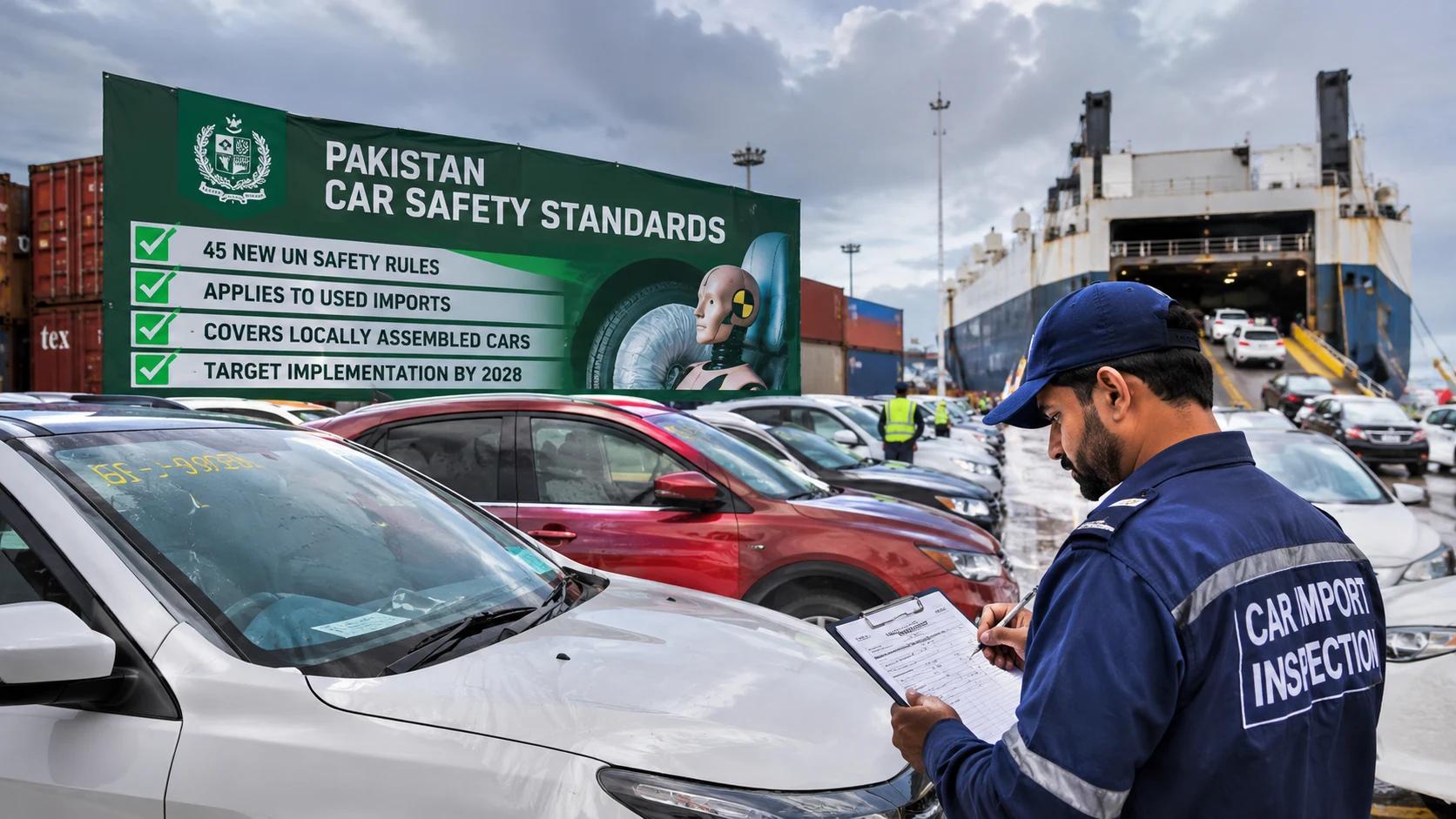
ISLAMABAD, Nov 8 (Focus Pakistan) - Pakistan car safety standards will take on 45 new United Nations rules, raising the bar for cars that local plants assemble and second-hand units that importers bring in. The overhaul comes with an extraordinary government promise.
The rules come from the UN’s WP.29 code and sit inside the new auto policy. Adviser to the Prime Minister for Industries and Production Haroon Akhtar Khan announced the measures on Saturday at an Islamabad press conference alongside Information Minister Attaullah Tarar.
Akhtar did not hedge. Vehicles that pass the new codes, he said, will rank among “the world’s safest vehicles, both manufactured and used.”
No rulebook can carry a claim that big. Meeting UN regulations can make a car safer, but it does not put that car among the world’s safest on its own. That takes crash tests, engineering assessments and independent safety ratings. Crashes in Pakistan don’t come down to steel and airbags alone either: how people drive, how engineers design roads and how police enforce traffic law all count. Akhtar told a Senate committee in June that road accidents kill roughly 25,000 people here each year. He offered that as an approximate national figure.
From 62 rules to 107
Few Pakistani car buyers know the name WP.29. The Geneva-based UN forum behind it sets the crash, braking and emissions rules that carmakers in Japan, South Korea and the European Union already build to. Pakistan came on board in April 2020 and, by the draft policy’s count, now applies 62 of those regulations. Akhtar’s 45 would take it past a hundred, to 107.
Nobody should expect the change overnight. In the draft, officials gave themselves until the last quarter of 2028 to bring the extra rules in.
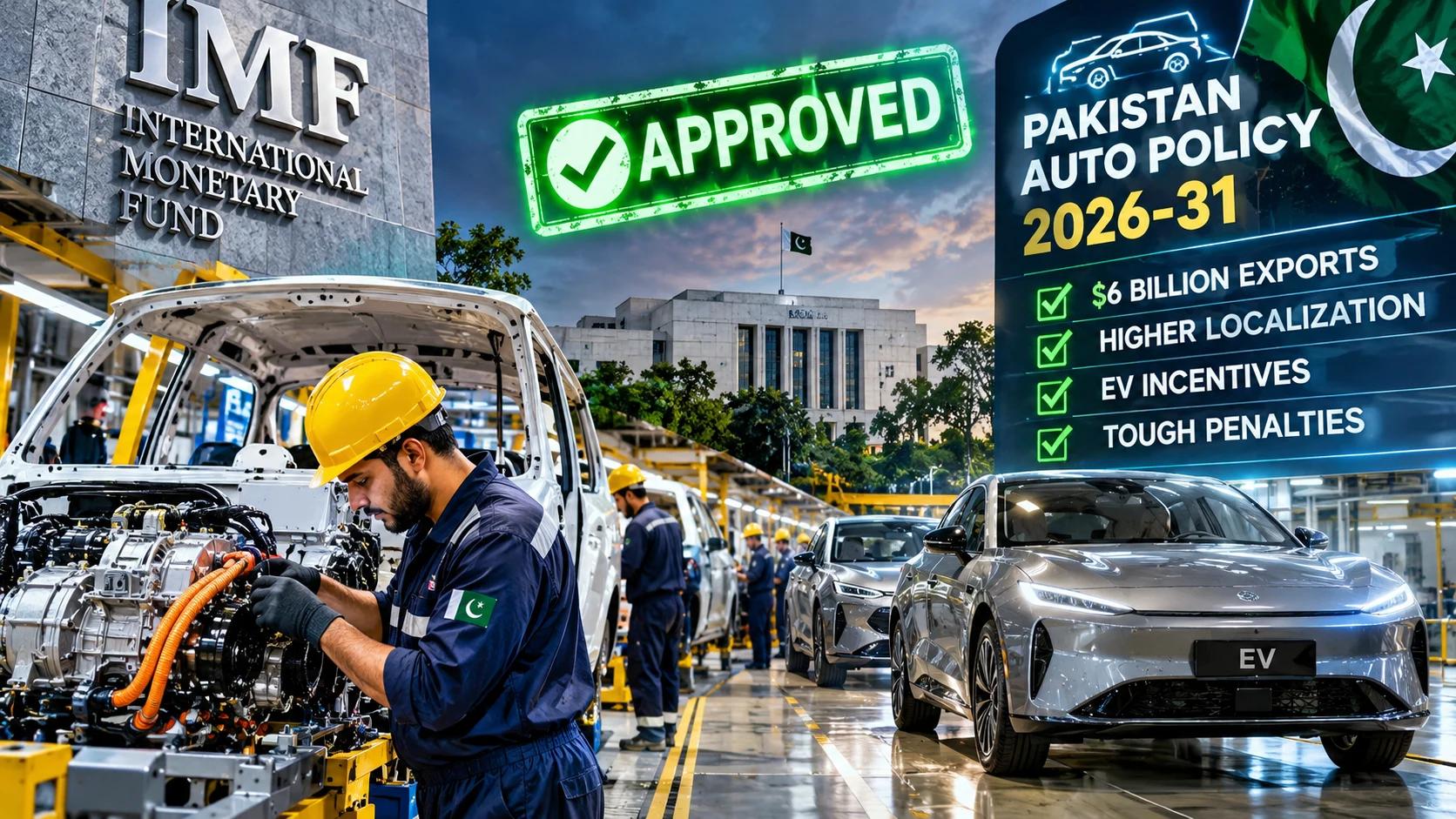
Akhtar counted six pillars in the Automobiles and Auto Parts Manufacturing Policy 2026-31, and safety is only one of them. He put affordability first, naming middle- and lower-middle-class families as the buyers he had in mind, then ran through exports, localisation, electric vehicles and transparency.
Three words in Akhtar’s quote, “manufactured and used,” carry real weight. Local assemblers have lobbied hard for a level field against second-hand imports. They claim nearly 22,000 used vehicles entered Pakistan under the baggage scheme in the first five months of FY26 alone.
Last December, Akhtar promised them that every imported vehicle would meet the same safety and quality rules as cars rolling off local lines. Pre-shipment inspections, he said, would check compliance.
Rules on paper need labs on the ground. The draft policy proposes a Rs1.7 billion Pakistan Automotive Testing Institute. It would focus on facilities that private third-party testers cannot build on a commercial basis.
The safety drive also reopens a question of who holds the pen. Last year, the industries ministry gave the Engineering Development Board authority over vehicle safety and quality standards. That move set off a dispute with the Pakistan Standards and Quality Control Authority, the statutory national standards body, which has spent years developing standards for automotive safety parts. The full policy document will need to show how the two agencies split the work on the 45 new rules.
Prices, advances and a $6 billion bet
Akhtar paired the safety push with a promise buyers will like more. “The prices of all vehicles, except luxury vehicles, will come down,” he said. Prime Minister Shehbaz Sharif, he added, has made cheaper cars below 1,300cc a special priority.
The policy would bar carmakers from collecting more than 20 percent of a vehicle’s price as an advance. On exports, the draft sets a $6 billion target for vehicles and parts combined across the policy’s five years, from a base of roughly $200 million today. Akhtar warned that manufacturers who miss their export targets would face financial penalties. Under the draft, a company that misses its target two years running would lose its manufacturing certificate.
Tarar said the government wanted to address speculation before it sought final sign-off. Akhtar said the cabinet’s approval process began the same day.
The tension now sits in plain view. Airbags, stronger body shells and better brakes cost money. The government has promised safer cars and cheaper cars in the same breath, and assemblers must now deliver both.