
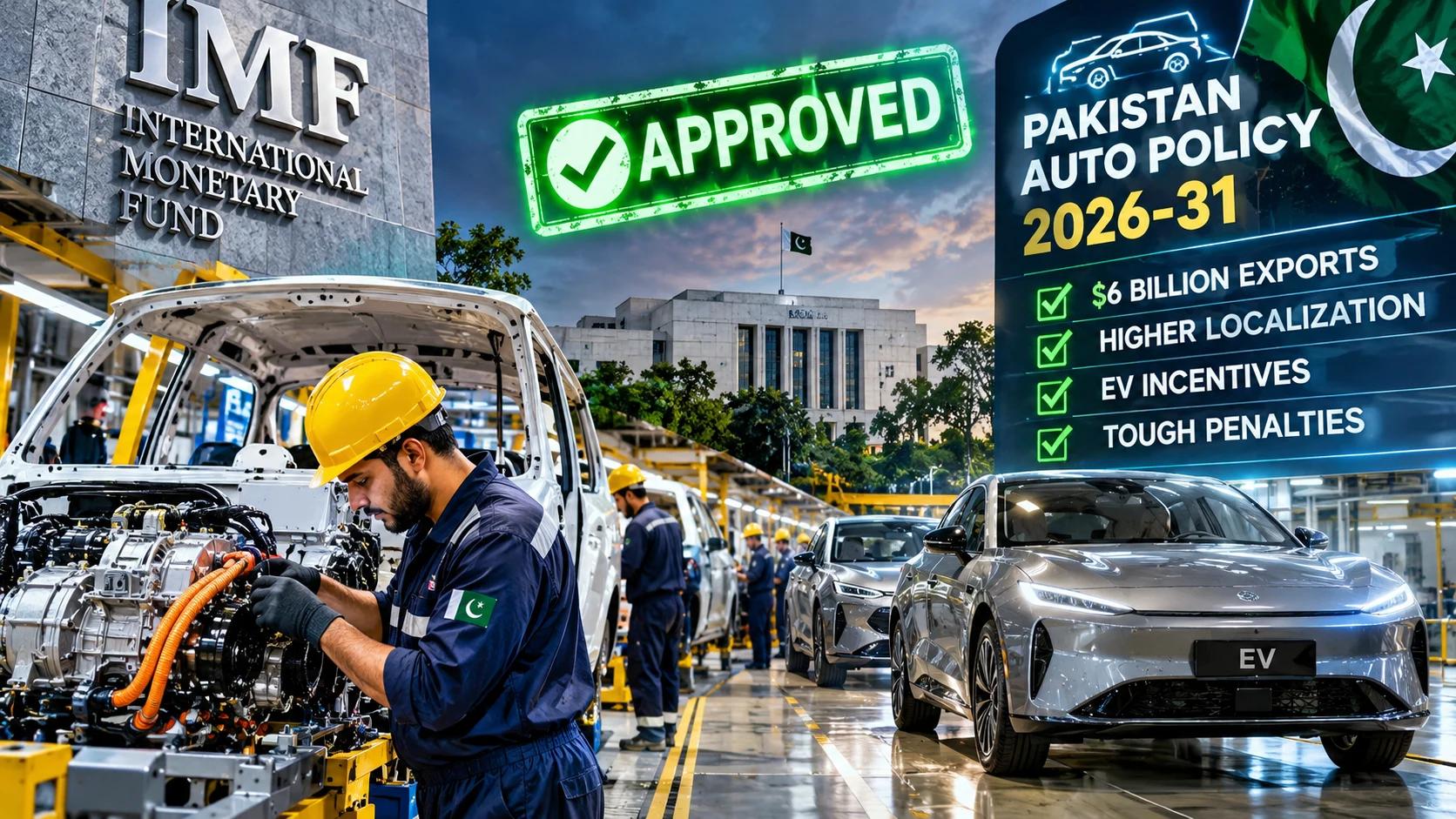
Pakistan's Auto Policy 2026-31 targets $6 billion in exports, $17.7 billion in foreign exchange savings and strict localization rules.
ISLAMABAD, Nov. 12 (Focus Pakistan) — Carmakers face a blunt choice under the new Pakistan Auto Policy 2026-31: export, or risk losing their manufacturing certificates.
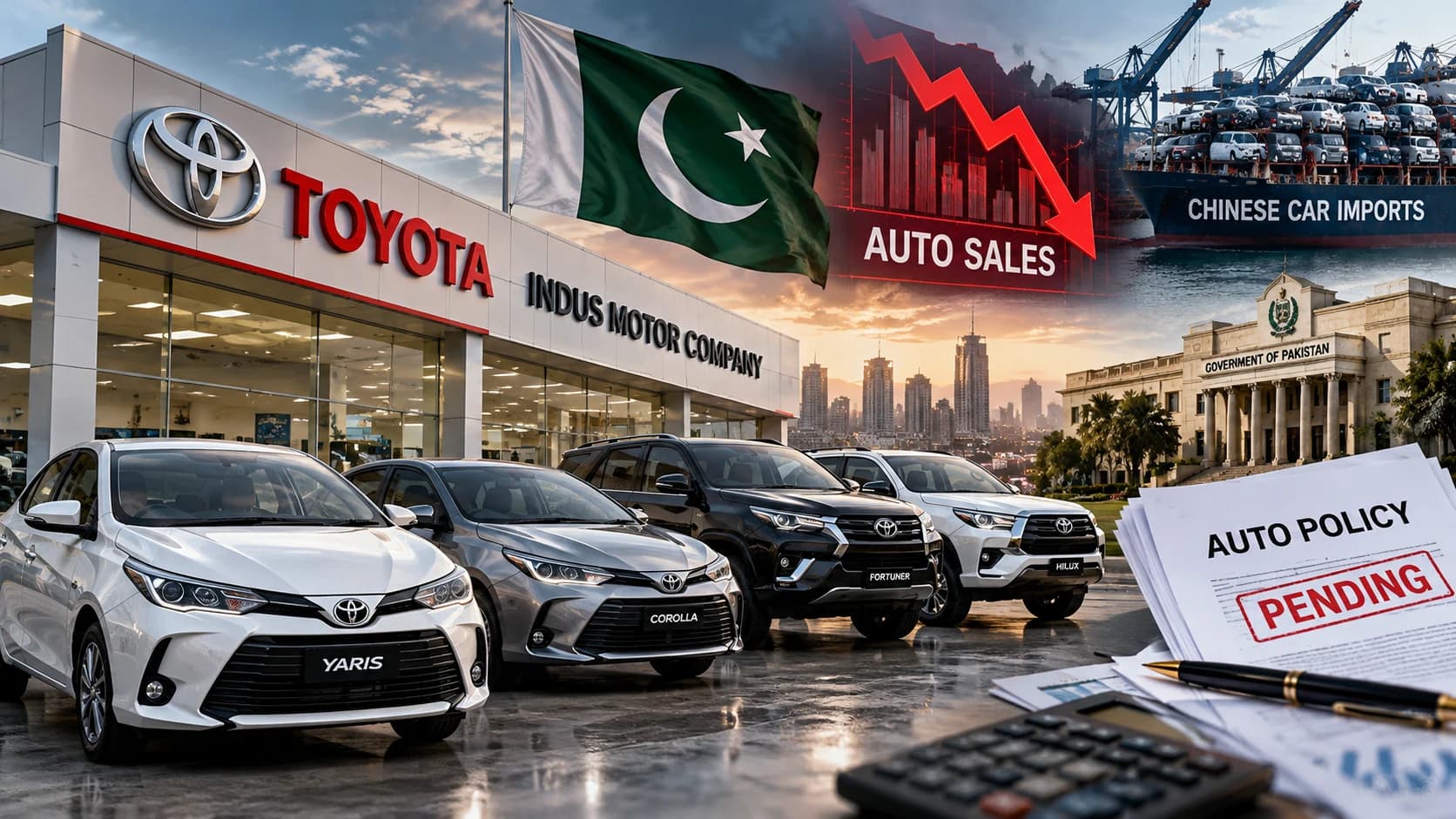
Prime Minister Shehbaz Sharif has approved the Autos and Auto Parts Manufacturing Policy 2026-31 after the International Monetary Fund raised no objections to the draft, according to sources. The government plans to take it to Parliament as a money bill, effectively a mini-budget, once the federal cabinet signs off.
The new framework replaces the previous auto policy, which expired on June 30.
Penalties with teeth
The policy sets a target of about $6.01 billion in cumulative automotive exports between 2026 and 2031. It counts on parts makers for $3.29 billion, or 55 percent, and on assemblers for the remaining $2.72 billion. That marks a sharp turn for an industry whose exports of vehicles and parts remain negligible, according to a July policy brief from the Pakistan Institute of Development Economics.
Manufacturers that miss their export obligations face penalties of 1 to 3 percent of annual factory-gate sales. Two consecutive years of failure could cost them their manufacturing certificates, unless force majeure applies. The policy also requires automakers to find export openings through the global supply chains of their foreign principals.
To soften the push, a Drawback of Local Taxes and Levies scheme offers exporters support worth 5 percent of net free-on-board export value, plus another 10 percent on qualifying incremental exports.
Also Read: Cheaper EVs, Costlier Engines: What Pakistan’s New Auto Policy Means
Existing manufacturers must raise domestic value addition by 2 percent a year, or 8 percent over the policy period. Companies already at 50 to 65 percent localisation cannot slide back to the lower thresholds that apply to their rivals.
By 2030-31, minimum localisation reaches 40 percent for petrol and diesel cars and SUVs, 45 percent for light commercial vehicles, 80 percent for tractors and 90 percent for motorcycles and rickshaws. New energy vehicles face floors of 25 percent for cars and SUVs and 30 percent for two- and three-wheelers. Companies that miss their targets could face an additional three percentage points of customs duty on relevant non-localised CKD imports the following year, subject to the prescribed legal process.
The IMF’s electric push
The IMF spent months pressing for wider adoption of new energy vehicles, and the policy reflects that. Battery electric vehicles costing up to $15,000 qualify for a 5 percent customs duty for the first two years, but only if the importer sets up local assembly or manufacturing.
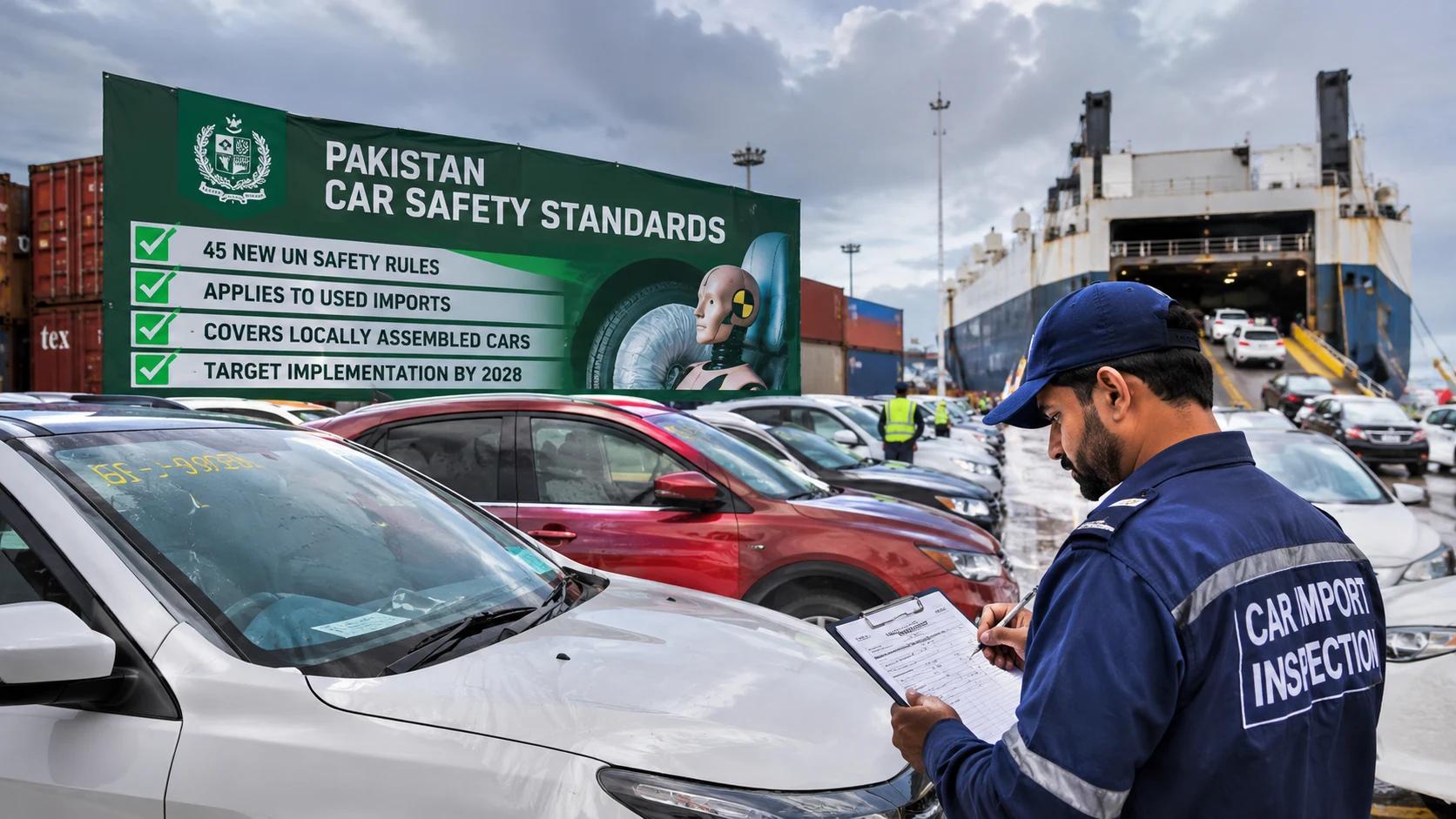
Those importers must post a surety bond and an irrevocable bank guarantee covering the duty difference. They must also start commercial production of the imported model by September 30, 2028. If they miss that date, the government cashes the guarantees.
The government expects the shift to cut oil imports by about 1.823 million tonnes over the policy period. It projects $17.7 billion in cumulative foreign exchange savings compared with importing the same vehicles fully built.
Also Read: Pakistan Auto Profits Face 35% Crash as Sazgar, Honda Earnings Come Under Pressure
Pakistan has about 2,200 auto parts manufacturers. A Rs2.1 billion Vendor Upgradation and Technology Transfer Programme, which the Engineering Development Board and SMEDA will run, will fund technology upgrades, skills training, quality certification and export readiness. The government wants at least five anchor firms to invest during the policy period. It also wants contract manufacturing to fill idle plant capacity, which the policy puts at between 41 and 80 percent.
Haroon Akhtar Khan, the prime minister’s adviser on industries and production, said the policy moves the industry from import-dependent assembly toward export-oriented manufacturing and deeper localisation.
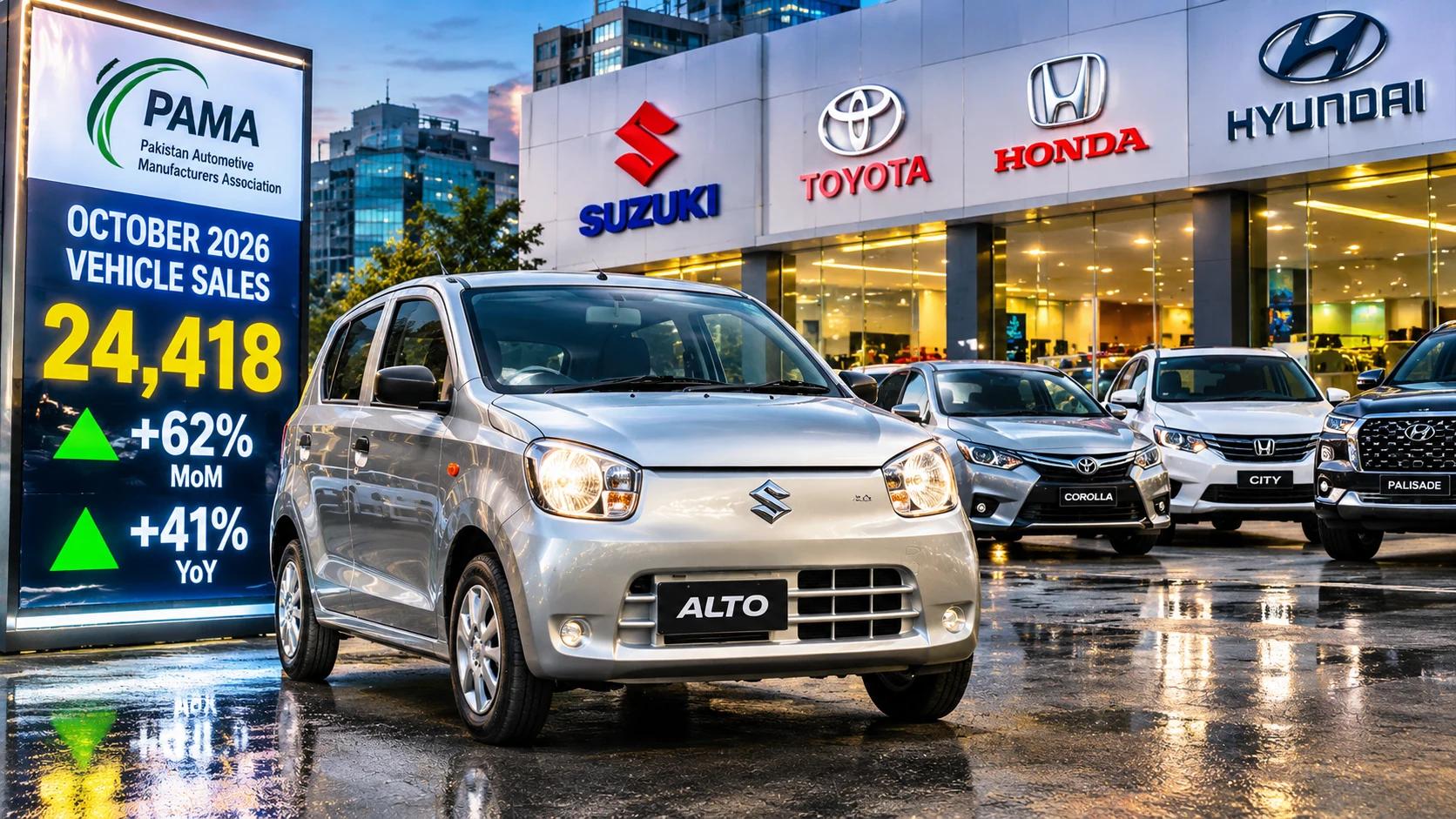
The demand base exists. Passenger car sales rose 39 percent to about 156,000 units in fiscal 2025-26, and motorcycle and rickshaw sales climbed 30 percent to nearly 1.97 million, Pakistan Automotive Manufacturers Association data show.
The government plans a midterm review in 2028. Automakers that do not sign performance agreements with the Engineering Development Board will not qualify for concessional tariffs on imported parts.