
Pakistan’s computing students face a nationwide skills assessment in January as HEC moves to measure what graduates can actually do, not just what their degrees say.
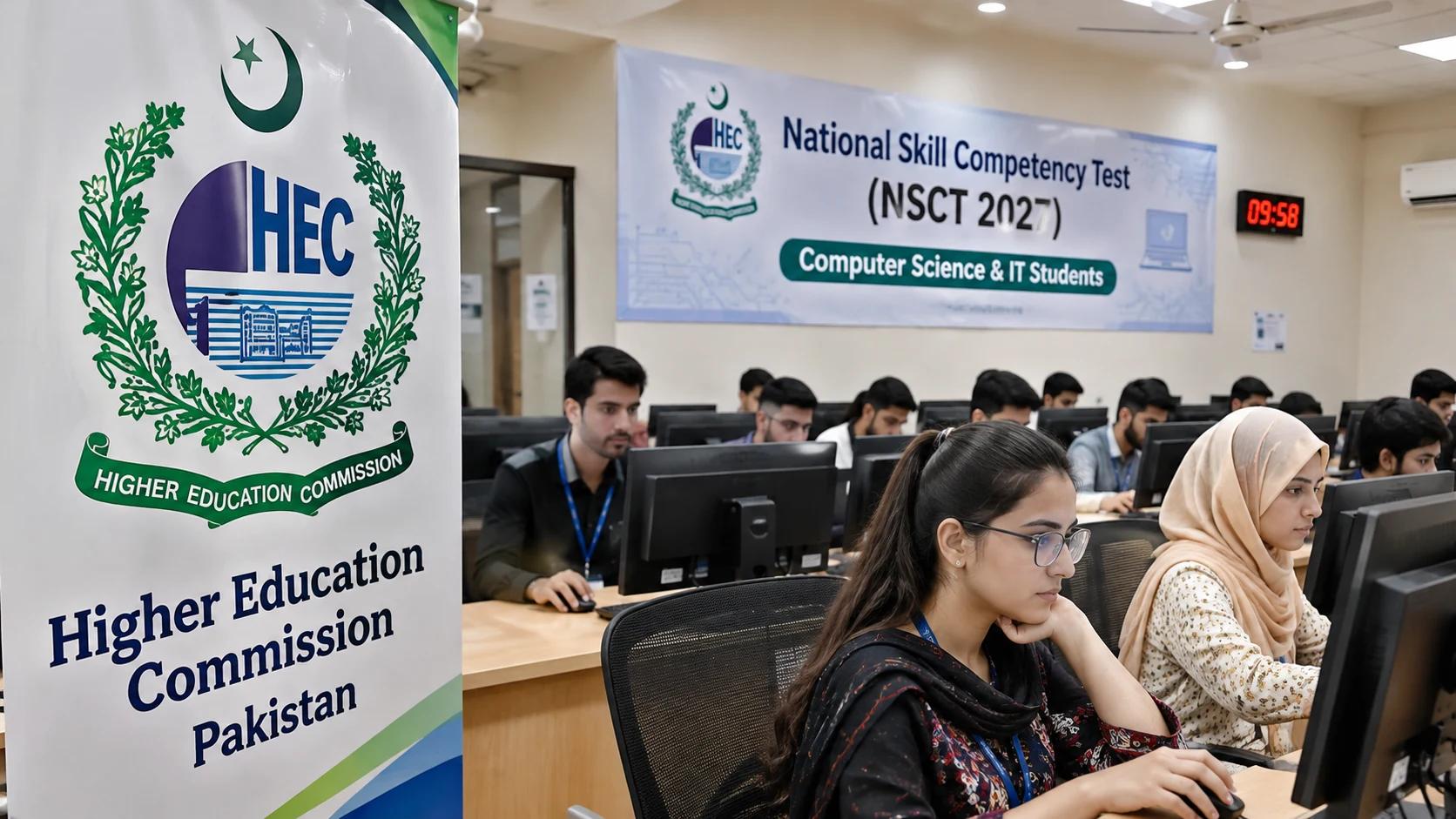
ISLAMABAD, Nov. 9 (Focus Pakistan) - Final-year computing students across Pakistan will sit NSCT 2027, the mandatory National Skill Competency Test, in January. This time their universities have plenty riding on it too: the last round ended with HEC freezing fresh admissions in certain computing programmes at 44 institutions.
The dates are January 23 and 24, 2027, though the Higher Education Commission (HEC) still calls them tentative. Students will take the exam on computers at more than 100 locations around the country. Anyone in the 7th or 8th semester of an eligible computing or IT degree has to sit it.
The rule applies equally to main campuses, sub-campuses, constituent colleges and affiliated colleges. Students at smaller institutions outside the big university brands have no way around the exam.
What the first NSCT exposed
The first NSCT, held on April 4 and 5 this year, gave Pakistan its first nationwide measure of what computing graduates actually know. The answer made for uncomfortable reading.
Of 40,784 registered students, 33,038 turned up, an 81 percent attendance rate, at 165 centres in 112 cities. Even the strongest subjects produced modest numbers. Web development basics topped the table, with 54.1 percent passing. AI and machine learning came next at 50.8, and software engineering scraped past the halfway mark at 50.1.
Also Read: Seven International Scholarships for Pakistani Students, Deadlines Approaching Fast
The foundations cracked. Only 33.8 percent cleared operating systems. Networks and cloud computing? 39.6 percent. Data structures and algorithms did a little better, at 40.2. Employers should take note. Most software firms expect a fresh graduate to know this material cold.
Geography widened the gap. In Islamabad, just over half the candidates passed: 52.9 percent. No other region crossed 43 percent. Sindh managed 42 and Punjab 39.4. Balochistan finished last at 29 percent, fewer than three students in ten. Khyber Pakhtunkhwa did barely better on 30.2, with Azad Jammu and Kashmir on 31 and Gilgit-Baltistan on 32.6.
HEC then moved. It published a list of the bottom 20 percent of institutions. On June 22, it issued a student advisory that temporarily halted fresh intake in certain computing programmes at 44 public and private universities and degree-awarding institutions. Those admissions stay on hold until HEC completes its institutional reviews and the competent authority grants approval. Other programmes at the same universities carry on.
Why January matters for universities
June’s crackdown has raised the stakes for every computing department in the country. HEC has already linked NSCT scores to national benchmarking and places universities in performance tiers according to how their students score.
Also Read: 84% Fail Sindh Teaching Licence Exam as Government Moves to Hire Private Testing Firm
The commission has not said whether the 2027 results will trigger fresh suspensions. Still, for institutions that escaped the first cut, one weak cohort could prove expensive. For those under review, the January results will give the public its clearest view yet of whether anything has changed in their classrooms.
Students had something to gain last time as well. In the 2026 round, top performers earned a joint certificate from HEC, the Pakistan Software Export Board (PSEB) and the Pakistan Software Houses Association (P@SHA), along with a place in a national IT talent pool open to employers. HEC has not yet said whether the same rewards apply in 2027.
Last time, Virtual University of Pakistan ran the exam, with the IT ministry, PSEB, P@SHA and the National Computing Education Accreditation Council on board. The 2027 announcement does not yet specify registration deadlines.
Final-year students should contact their university’s NSCT focal person and confirm their registration. Department heads face a tighter clock. About ten weeks remain before the test, and the subjects that sank the first batch, operating systems, networking and algorithms take far longer than that to fix in a syllabus.
The April test showed where the problems lie. The January test will show whether universities did anything about them.