
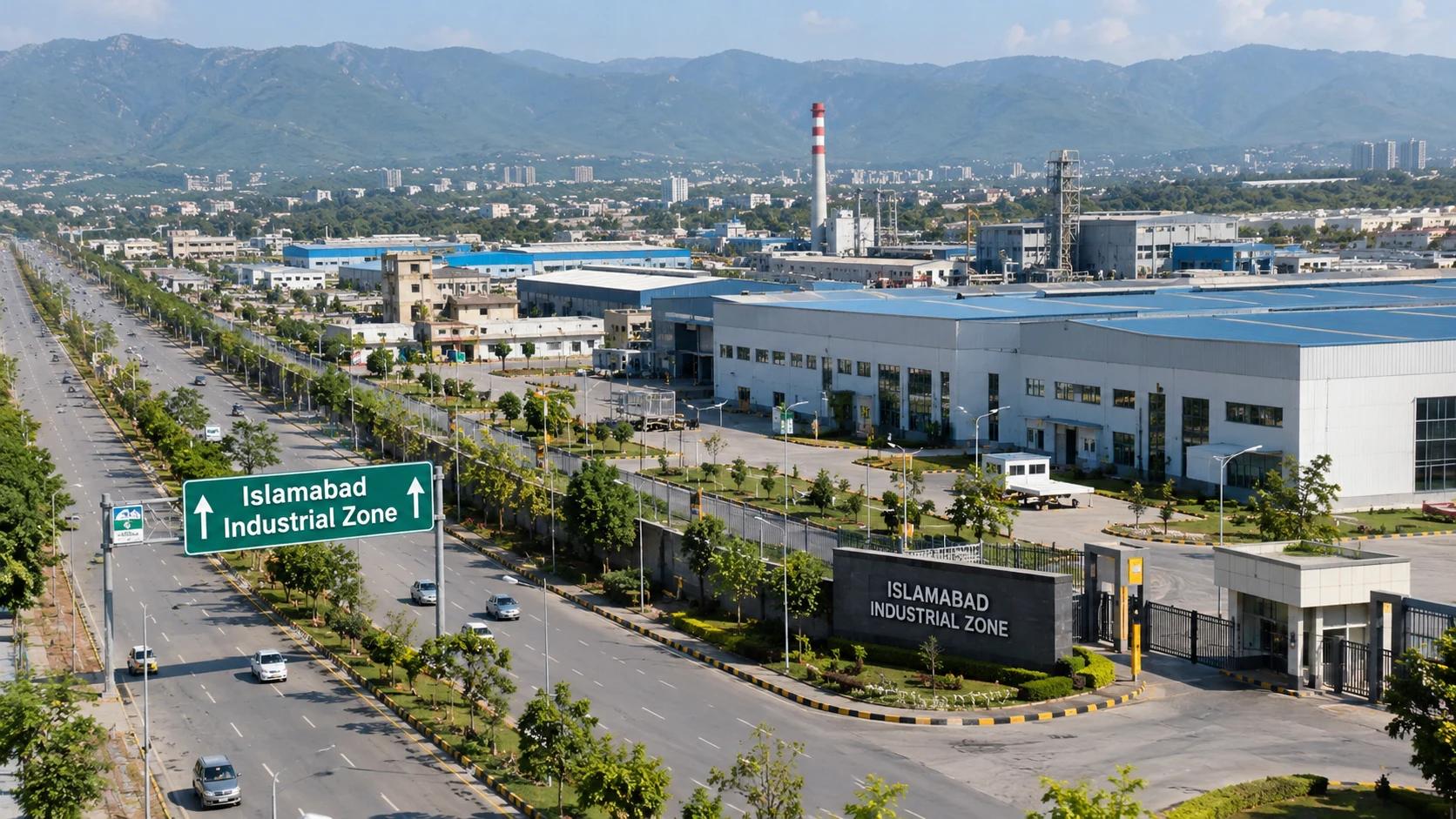
Islamabad's business leaders seek federal and Punjab government support for a new economic zone as industrial land shortages threaten investment, expansion and jobs.
ISLAMABAD, Nov. 16 (Focus Pakistan) — Islamabad's business community has approached federal and Punjab authorities to secure up to 1,000 acres for the proposed Islamabad Special Economic Zone, aiming to attract Chinese and Turkish investors as a worsening industrial land shortage forces manufacturers to look beyond the capital.
ISLAMABAD, Nov. 16 (Focus Pakistan) — Islamabad's business community has approached federal and Punjab authorities to secure up to 1,000 acres for the proposed Islamabad Special Economic Zone, aiming to attract Chinese and Turkish investors as a worsening industrial land shortage forces manufacturers to look beyond the capital.
President of the Islamabad Chamber of Commerce and Industry (ICCI) Muhammad Zikria Akbar Zia said on Sunday that the special economic zone was on top of his agenda. He also demanded a 10-year economic policy framework for the country.
Islamabad Special Economic Zone Plan
He said that Islamabad’s industrial sector came up some 50 years ago, when the city’s master plan reserved Sectors I-9 and I-10 for industry. The population of the federal capital has increased manifold since then, he said, and today an investor cannot find even one plot in Islamabad to set up a new unit.
This is not the first time the chamber has raised the issue. Back in 2008, ICCI and the Capital Development Authority (CDA) had moved ahead with a plan for a new industrial estate in Sector I-17, but the CDA later amended the master plan and gave I-17 for institutional use, chamber members say. Traders also complain that many owners in I-9 now run warehouses and offices on industrial plots instead of factories.
Zia said that he, along with senior members of the chamber, had approached the National Coordinator of the Special Investment Facilitation Council (SIFC), Lt General Asad ur Rehman Afzal Cheema, as well as Punjab’s Provincial Minister for Industries, Commerce and Investment, Chaudhry Shafay Hussain, on the matter.
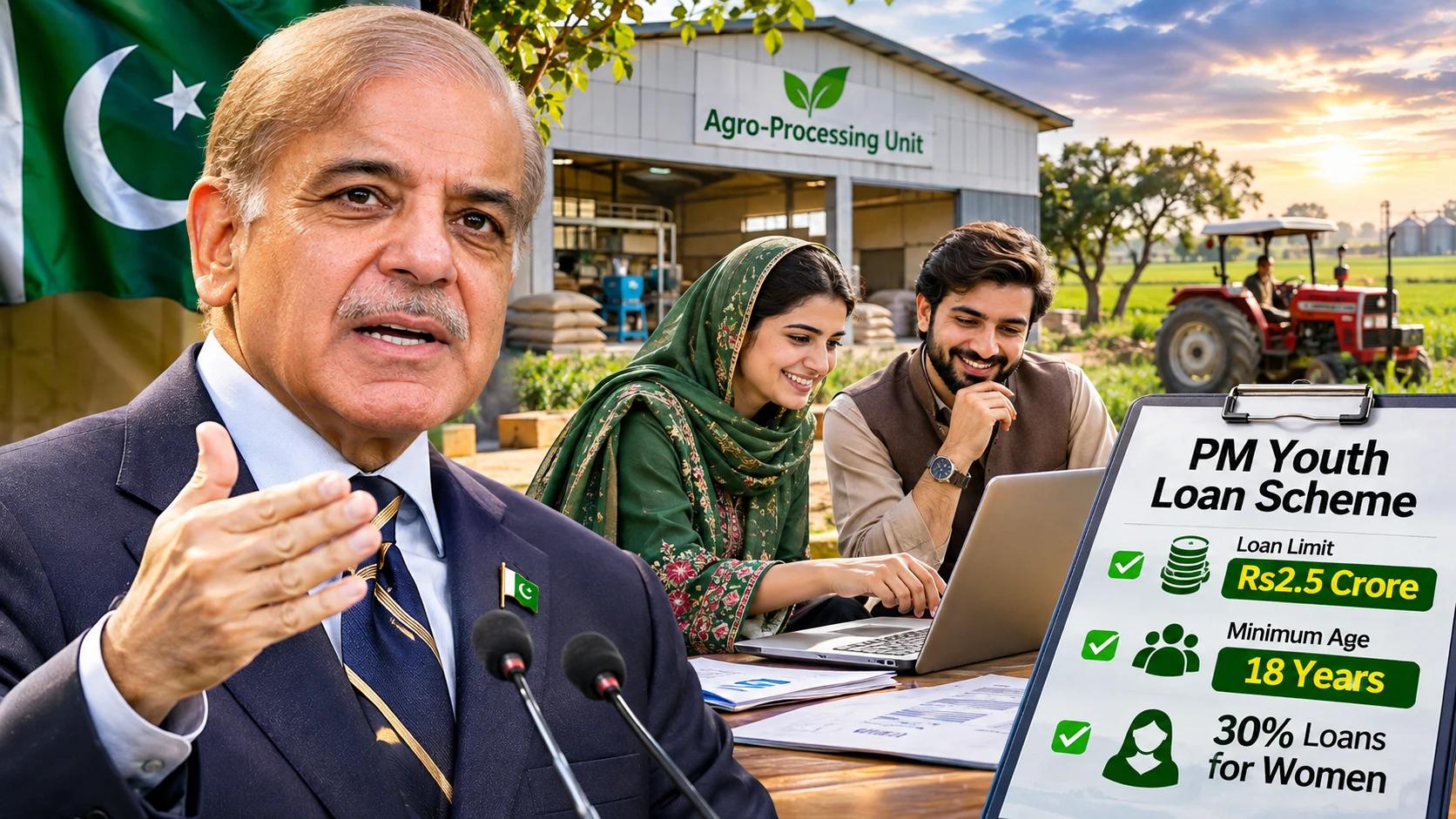
Also Read: Eighteen-Year-Olds Can Now Borrow Rs2.5 Crore Under PM’s Loan Scheme
The ICCI President was of the view that the zone would bring multibillion investment to the capital, generate thousands of jobs and stop the migration of local industry, which over the years has moved to other areas due to shortage of plots.
He said that Chinese and Turkish companies want to invest in Pakistan, especially in Islamabad, which he termed the safest area of the country. The zone would also help small and medium enterprises grow, he said, adding that SMEs are the backbone of the economy and matter more than large industrial units.
Talking about other problems of the city, Zia said Islamabad faces a serious shortage of water supply and the chamber is working with local leadership to solve it. The chamber recently got initial relief for traders over polythene bags, he said.
He further said that ICCI is also after relief on the State Bank’s debt-recovery rules and on port charges, besides administrative issues with the CDA, the Federal Board of Revenue (FBR) and the Islamabad Electric Supply Company (IESCO). He said the CDA should accommodate a non-voting member of the chamber so the business community gets a direct say in policy. He also demanded local government polls in the federal capital, saying the city has remained without its own elected representatives since long.
Central Asian Trade Links
On the ECO front, Zia welcomed the 30th meeting of the Council of Ministers that Pakistan hosted in Islamabad on November 15-16, with Pakistan holding the ECO chair for 2026-27. He said Pakistan must use the chairmanship to involve the private sector and to remove the hurdles traders run into at border crossings, and only then would the business community see any gain from it.
Also Read: Pakistan Offers Türkiye Same 1,000 Acres Again, Now With SEZ Status
According to Zia, the Islamabad Declaration and ECO Vision 2035, which the ministers were expected to adopt, could give the region a roadmap. He also wants ECOTA and the Transit Transport Framework Agreement to get off the ground, since traders still deal with heavy paperwork and costly freight.
He termed the UAP railway project a game-changer that would link Central Asian markets with Pakistani seaports. The three countries signed the framework agreement for its feasibility study in Kabul in July last year and Uzbekistan ratified it in February. The track will come from Termez via Naibabad, Maidan Shahr and Logar to Kharlachi. A lot depends on Afghanistan, where Islamabad has asked the Taliban government again and again to act against militants who attack Pakistan.
Zia said Pakistani exporters are doing more business with Uzbekistan, Tajikistan, Kyrgyzstan, Azerbaijan and Kazakhstan these days, and agreements signed by governments should now turn into joint ventures and real orders. He proposed ECO business forums, trade exhibitions, B2B meetings and exchange of business delegations on a regular basis. The chambers, he said, have to be part of it. Trade, investment and jobs in the region, he said, are the yardstick by which the business community will measure Pakistan’s year in the chair.