
Exports climb 8.52% in July–October FY27, but a faster surge in imports pushes Pakistan's trade deficit to $14.63 billion.
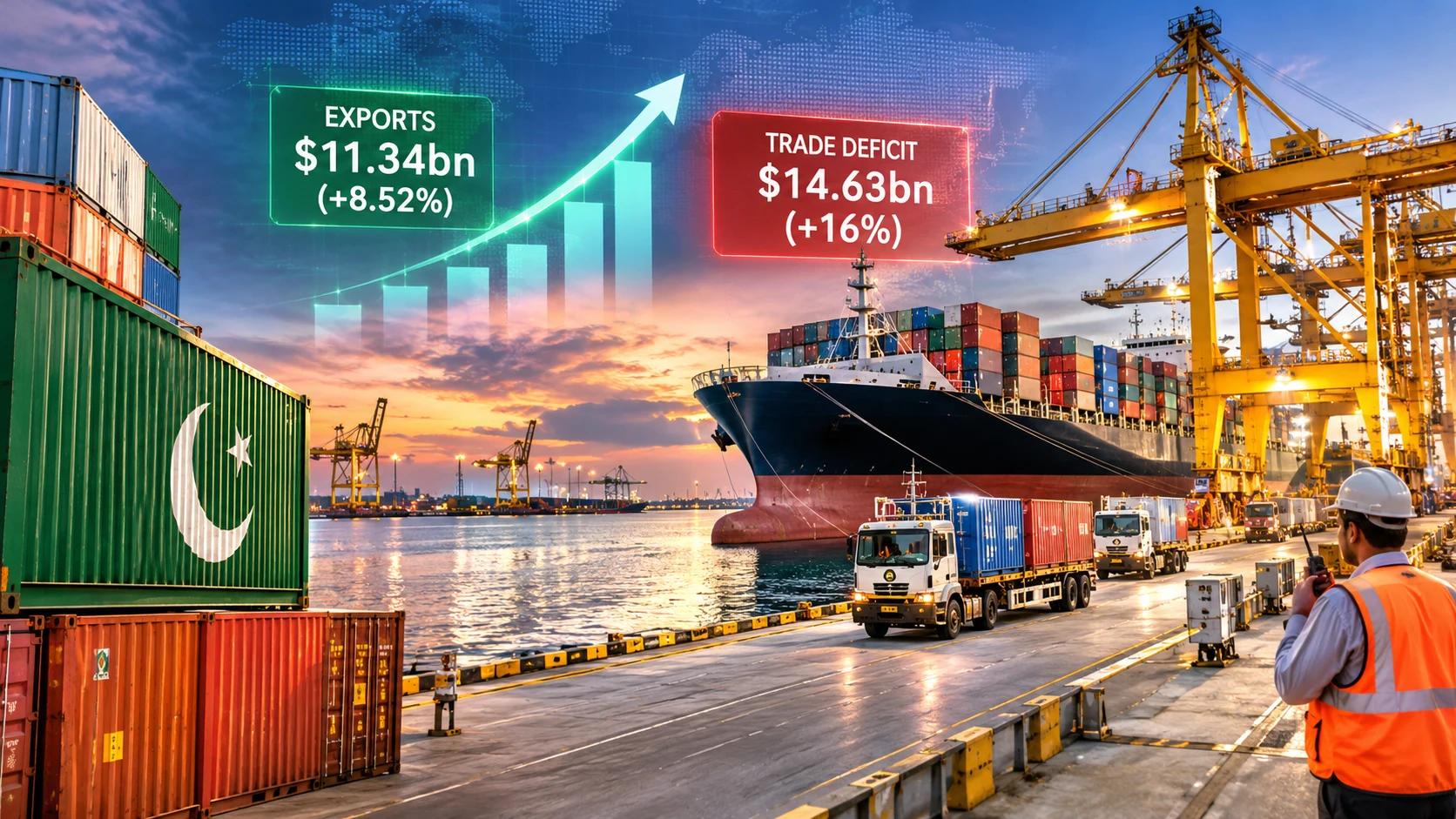
ISLAMABAD, Nov. 16 (Focus Pakistan) — Pakistan exports climbed 8.52% to $11.34 billion during the first four months of fiscal year 2026-27, but a sharper increase in imports widened the country’s merchandise trade deficit nearly 16% to $14.63 billion, according to provisional figures from the Pakistan Bureau of Statistics (PBS).
Put differently, Pakistan earned around $890 million more from exports in July-October, but spent nearly $2.9 billion more on imports in the same months, over three times the additional export receipts, which shows how uneven the trade recovery has been so far.
As per the PBS data, exports during July-October 2026 stood at $11.336 billion against $10.446 billion in the corresponding period of last fiscal year, while imports during the same four months rose by 12.59 percent to $25.964 billion from $23.060 billion. Imports, in short, outgrew exports both in percentage terms and in dollar terms during the period.
The trade gap, therefore, widened to $14.628 billion from $12.614 billion in the same period of last year, up by about $2.01 billion, which means that for every dollar the country earned from merchandise exports in these four months, it spent around $2.29 on imported goods.
Growth Comes Off a Low Base
The headline growth of 8.52 percent, however, has come on top of a weak base, as exports had declined by 4 percent in July-October of the last fiscal year, when the country earned about $440 million less from exports than in the same months of FY25. If compared with July-October FY25, this year’s export receipts are only around 4 percent higher. In other words, a good part of this year’s growth only makes up for the ground that exports lost last year.
Exports for the whole of FY2025-26 had fallen by about 6 percent to $30.1 billion against the government’s target of $35.3 billion under the National Economic Transformation Plan, while imports in that year rose to about $69.6 billion, the highest in four years.
October’s export growth was slower than the average for the four months. Exports in the month stood at $2.929 billion, up only 2.84 percent from $2.848 billion a year earlier and 0.21 percent from September, while imports climbed 11.81 percent year-on-year to $6.806 billion.
October’s trade gap stood at $3.877 billion, up 19.70 percent from $3.239 billion in the same month last year and 10.30 percent higher than the $3.515 billion of September.
Budget Measures and Exporters’ Woes
According to the federal government, budgetary measures for FY2026-27, including reduced taxes and surcharges, quicker tax refunds, better use of export development funds, concessional financing and support for SME exporters, helped push exports up. The PBS figures do not, however, show what share of the increase came from these measures.
Exporters, meanwhile, are still dealing with high energy tariffs and costly logistics, and industry associations have been asking the government to rationalise energy costs and bring down the policy rate in order to keep export-oriented units running.
With imports adding about $2.9 billion against an extra $890 million from exports in the four months, the trade figures leave the external account under pressure, and exports will have to pick up at a much faster pace than at present if the country wants to narrow the widening gap with imports.