
Hanif Abbasi announces a 39% revenue growth target as Pakistan Railways expands private-sector participation, upgrades passenger trains and plans to revive eight branch routes.
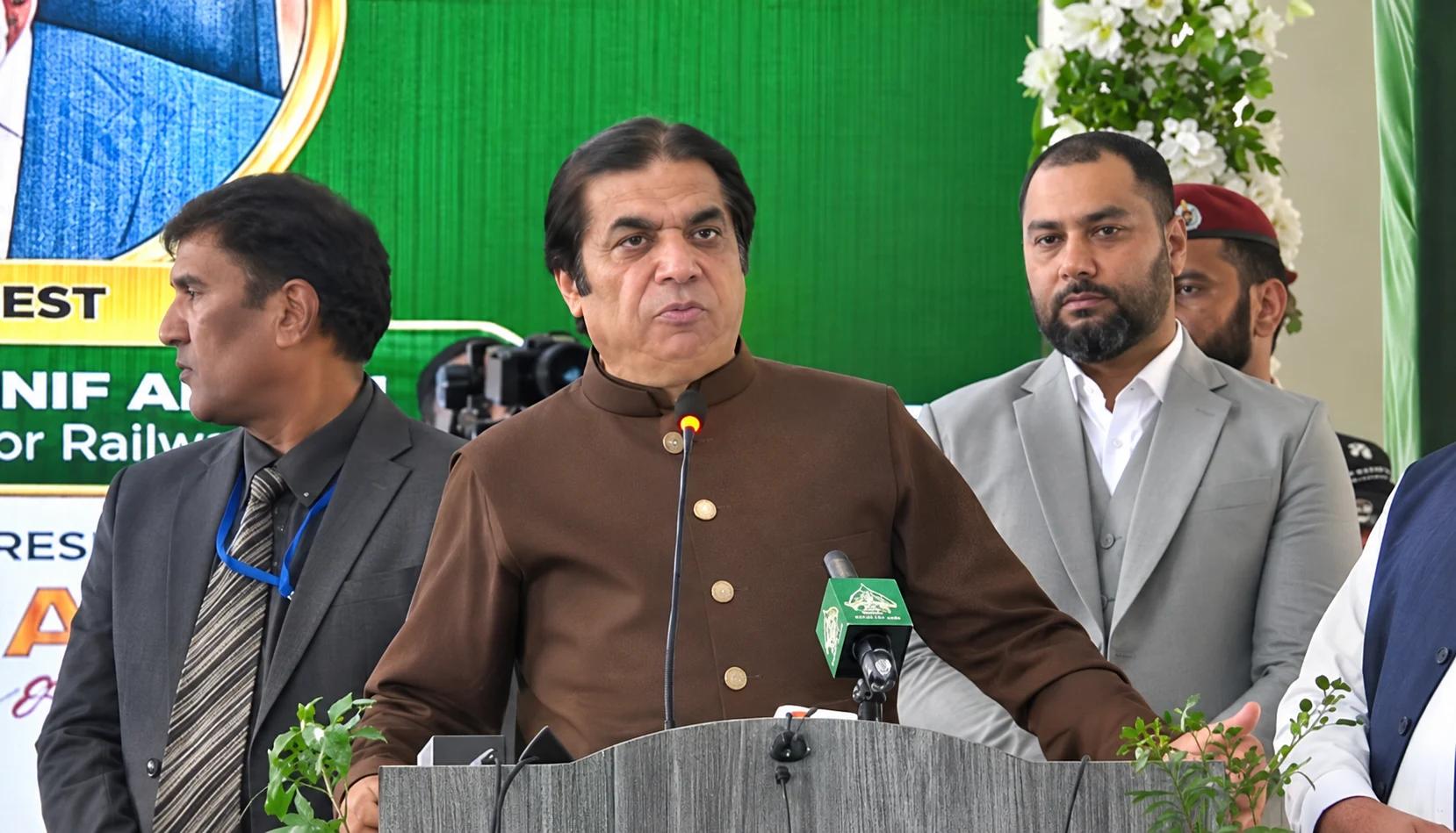
RAWALPINDI, Nov. 9 (Focus Pakistan) — In 78 years, Pakistan Railways revenue never earned Rs100 billion in a single year. Railways Minister Hanif Abbasi says that streak is over. Standing at Rawalpindi station on Monday, he went a step further and named his next number: Rs160 billion.
He was there to unveil refurbished coaches for the Awam Express. The train now runs 11 upgraded coaches. The minister did not hide his opinion of the train’s past. “This was the Awam Express nobody even wanted to look at,” he said, and promised upgrades for more trains.
Abbasi told the gathering that revenue rose from Rs88 billion to Rs115 billion. The ministry has not released audited figures for that comparison. Reaching Rs160 billion by the end of the fiscal year in June 2027 means finding another Rs45 billion, close to 40% more.
The figures need context. In the Senate on Oct. 30, Abbasi said Pakistan Railwaysspends Rs84 to earn every Rs100 of revenue. Revenue tells only half the story. Pension liabilities and fleet repairs still weigh heavily on the department’s books.
Privatisation Moves From Trains to Hospitals
Abbasi said the government will take Pakistan Railways down the same privatisation road it has chosen for other sectors.
The next target is healthcare. The ministry plans to outsource railway hospitals. Abbasi promised that railway employees will continue to get free treatment.
The push has already reached the tracks. In June, Pakistan Railways handed commercial management of five passenger trains to private operators in a Rs10.75 billion deal, APP reported. The five were the Awam Express, Millat Express, Karakoram Express, Mianwali Passenger and Narowal Passenger.
Also Read: Pakistan Railways Targets 150% Freight Share Surge, But ML-1 Stalls
Abbasi admitted that the Karakoram and Millat Express had run into problems after the switch. He said the ministry fixed them.
He also said children of railway workers now receive quality education, which he offered as evidence that the reforms reach beyond balance sheets. The minister also pledged to revive neglected branch routes, a sore point for small towns that lost their trains years ago.
Abbasi said the Punjab chief minister asked him about restoring branch-line services. He promised four routes this fiscal year and four more the next. Punjab and Khyber Pakhtunkhwa have already signed on. Sindh, Abbasi said, can join whenever it wants, because the arrangement already exists.
He said the railways launched these projects in consultation with the provinces, a model that shares costs and could speed up revivals.
The Bigger Test: ML-1 and an Ageing Fleet
The upbeat revenue figures arrive alongside tougher numbers. Late last month, Abbasi told senators that delays have pushed the cost of the Main Line-1 (ML-1) upgrade up by $2 billion, to an estimated $8 billion.
He also told the Senate that 172 of the railways’ 439 locomotives stand out of service. According to media reports of his briefing, fixing just 40 of those engines carries a Rs45 billion price tag.
That’s the backdrop to the Rs160 billion promise. A commuter in Narowal or Mianwali won’t care much about revenue charts. He’ll care whether the train shows up on time, whether his seat is clean, and whether the branch line near his town actually reopens.
For now, Abbasi has announced a revenue record and raised the bar. The months ahead will show whether private operators, restored branch lines and an ageing locomotive fleet can carry Pakistan Railways to Rs160 billion by June 2027.